Table of contents
- What Treated Pine Is and Why It’s Treated
- Painting Treated Pine: Safe, But Not Immediate
- Why Drying Time Matters More Than People Realise
- How Long Treated Pine Needs to Dry Before Painting
- Suitable Paint Types for Treated Pine
- Why Priming Is Not Optional
- Indoor vs Outdoor Treated Pine Painting
- Common Traps to Avoid
- FAQs
Treated pine turns up everywhere on Australian job sites. Decks. Fences. Pergolas. Retaining walls. It is affordable, easy to work with, and built to survive outdoors.
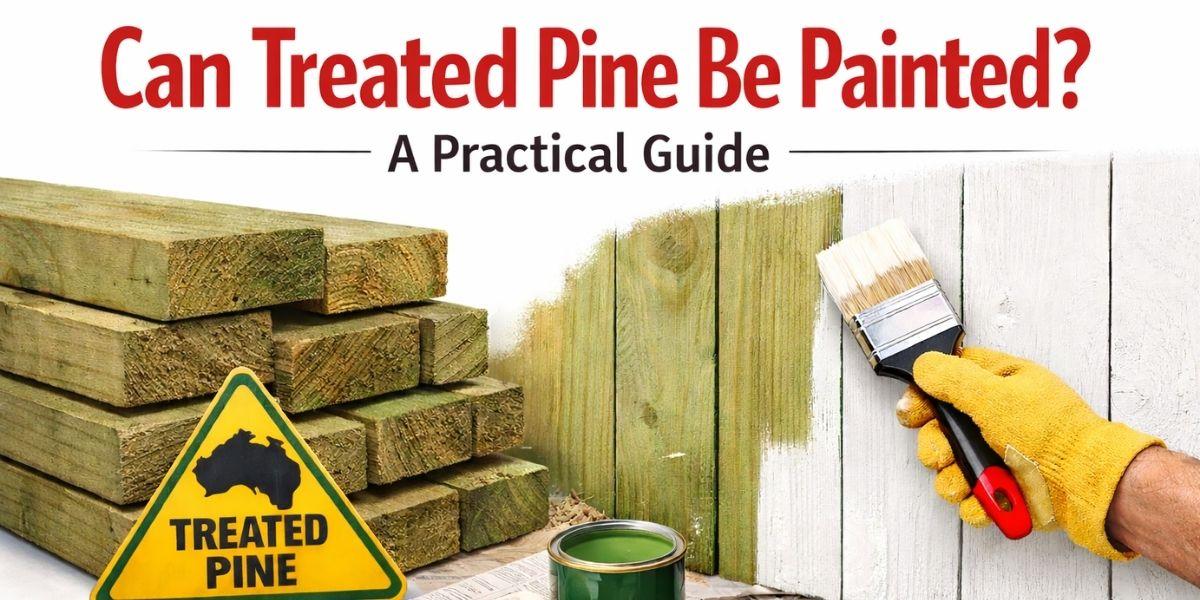
The question comes up constantly. Can treated pine be painted?
Yes. But only if it is handled properly. Miss the prep, rush the timing, or choose the wrong paint, and failure is almost guaranteed.
This guide breaks it down in plain terms. What matters. What does not. And where most projects go wrong.
What Treated Pine Is and Why It’s Treated
Treated pine is softwood that has been pressure-treated with preservatives to resist rot, termites, and fungal decay. In Australia, most treated pine is H3 or H4 rated, meaning it is designed for outdoor exposure.
But those preservatives are water-based. Freshly treated timber holds a lot of moisture. Sometimes more than people expect.
This moisture is the core issue. Not the paint. Not the brand. Not the primer colour.
Painting Treated Pine: Safe, But Not Immediate
Painting treated pine is safe. Structurally and chemically, there is no problem. The problem is timing.
Freshly treated pine should not be painted straight away. Doing so traps moisture inside the timber. That moisture will try to escape. Paint film is the weakest point.
The result?
- Peeling paint
- Bubbling
- Patchy adhesion
- Premature failure
This is the biggest mistake seen on fencing and decking projects. Painted too early. Looks fine for a few months. Then it starts to lift.
Why Drying Time Matters More Than People Realise
Drying time is not a suggestion. It is the controlling factor.
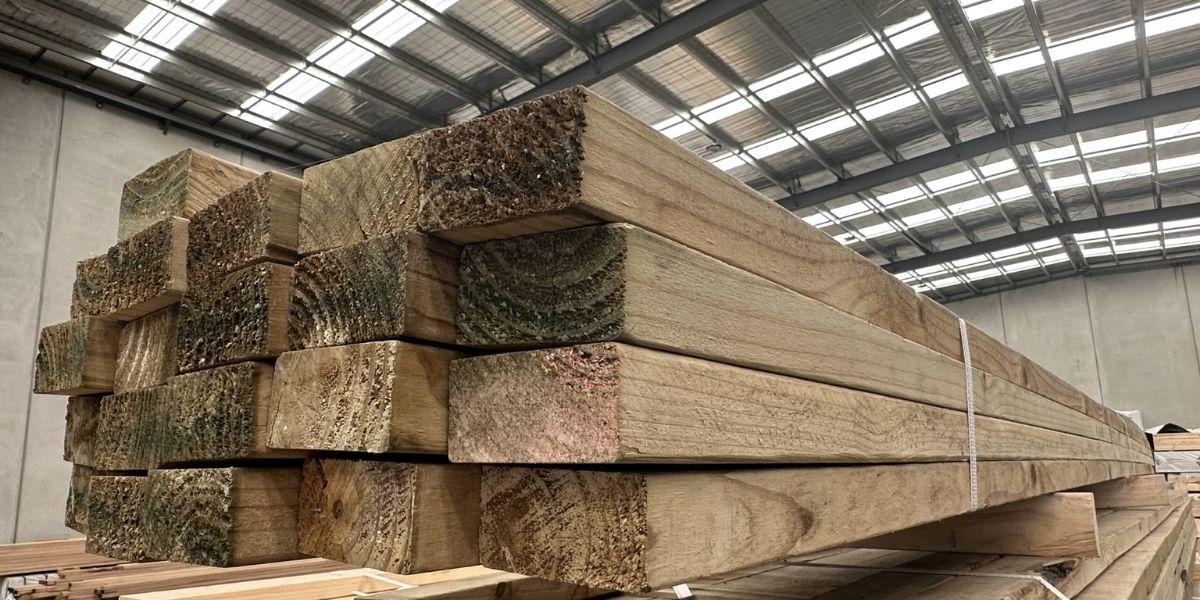
Treated pine leaves the plant saturated. Even if the surface feels dry, the core usually is not. Paint does not care how the surface feels. It reacts to what happens underneath.
Moisture moves outward. Always. If paint blocks that movement, pressure builds and paint lets go.
This is where many jobs fail. The timber was “dry enough” by touch. It wasn’t.
How Long Treated Pine Needs to Dry Before Painting
There is no single number. Climate, exposure, and timber size all matter.
As a general rule in Australian conditions:
- Minimum: 6–8 weeks
- Safer range: 3–6 months
- Best practice for critical finishes: Up to 12 months
Outdoor structures exposed to the sun and airflow will dry faster. Shaded or stacked timber will take longer.
A simple test helps. Sprinkle water on the surface.
- If it beads, the timber is still too wet.
- If it absorbs, painting can usually proceed.
This test is not perfect, but it catches most issues.
Suitable Paint Types for Treated Pine
Once the timber is dry, paint choice matters. Not all coatings perform equally.
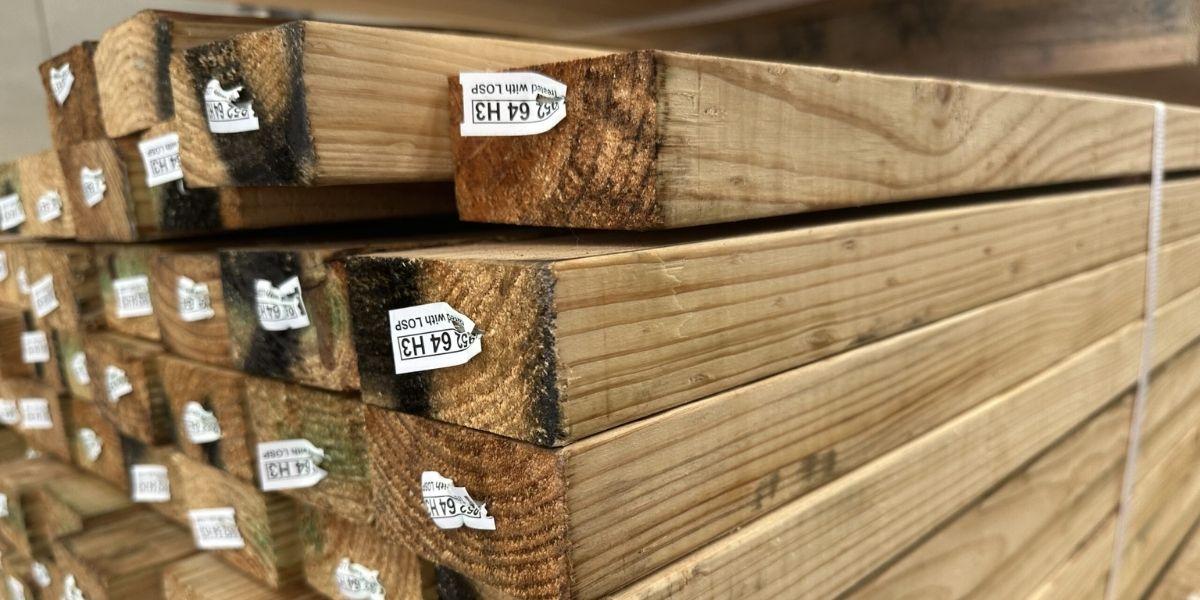
Best options include:
- High-quality exterior acrylic paints
- Acrylic-based timber paints
- Exterior oil-modified acrylics
These paints remain flexible. That matters outdoors. Treated pine moves with temperature and moisture changes. Rigid coatings crack.
Avoid interior paints outdoors. They fail quickly.
Avoid cheap all-purpose paints. They do not tolerate timber movement.
For outdoor use, always choose a paint rated for exterior timber.
Why Priming Is Not Optional
Priming treated pine is not negotiable. Even when using “self-priming” paints.
Primer does three things:
- Improves adhesion
- Seals residual moisture movement
- Evens out surface porosity
A dedicated exterior timber primer is the correct choice. Especially on end grain. End grain drinks moisture and paint. Seal it properly.
Skipping primer saves time today. Costs repainting later.
Indoor vs Outdoor Treated Pine Painting
Indoor treated pine is easier. Drying times are shorter, and environmental exposure is lower.
Outdoor treated pine is unforgiving. UV, rain, and temperature swings punish poor prep.
Expectations must match the location. Painted treated pine outdoors will always need maintenance. This is normal. Paint is a protective coating, not a permanent solution.
Common Traps to Avoid
These are the repeat offenders:
- Painting too early
- Skipping primer
- Using interior paint outside
- Ignoring end grain
- Painting in cold or damp conditions
Fixing these issues later costs more than waiting upfront. Every time.
FAQs
How long should treated pine dry before painting?
At least 6–8 weeks in good conditions. Three months is safer. For long-term outdoor performance, longer drying delivers better results.
What paint works best on treated pine?
High-quality exterior acrylic paints designed for timber. Flexibility and UV resistance matter more than brand.
Can treated pine be painted straight away?
No. Painting fresh treated pine traps moisture and leads to paint failure. This is the most common mistake.
Is priming necessary before painting treated pine?
Yes. Always. A proper exterior timber primer is essential for adhesion and durability.
Painting treated pine is not complicated. But it is often rushed. Dry the timber. Prime it properly. Use the right paint. Do those three things and the finish will hold.
That approach reflects how experienced builders work. It is also how practical timber suppliers like Timber Central expect treated pine to be used. Not rushed. Just done properly.