Choosing between treated vs untreated pine sounds simple, but it actually isn’t.
This decision affects durability, compliance, callbacks, and cost. Get it right, and the structure performs as expected. Get it wrong, and problems like moisture, termites, and premature decay show up fast.
The following breakdown focuses on how builders actually use pine on Australian sites. Not theory or marketing claims. Just what matters in practice.
The real question builders face
Most timber decisions come down to one issue: exposure.
Exposure to moisture, insects, contact and weather over time.
That exposure is what separates treated pine from untreated pine. Everything else follows from that.
What is treated pine?
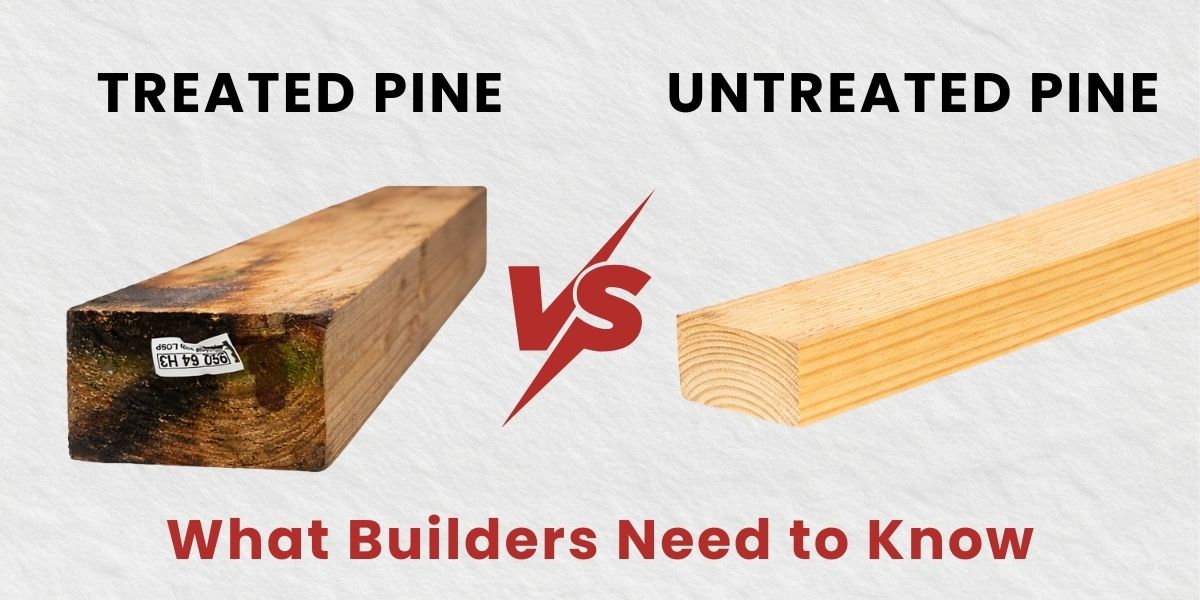
Treated Pine is pine that has been pressure-treated with preservatives to resist decay, fungal attack, and termites. The treatment is driven deep into the timber, not brushed on the surface.
In Australia, treated pine is graded into treatment hazard classes (H1 to H6). These classes matter more than people realise.
- H1–H2: Interior use. Protected from weather. Low to moderate termite risk.
- H3: Above-ground outdoor use. Exposed to weather.
- H4: In-ground contact. Posts, landscaping, structural ground contact.
- H5–H6: High-risk and marine environments.
This is the main issue.
The treatment class must match the exposure. Miss that, and the timber fails long before it should.
What is untreated pine?
Untreated pine is raw, kiln-dried or green pine with no preservative treatment. Nothing added. Nothing protecting it from moisture or pests.
That doesn’t make it inferior. It makes it a specific-purpose timber.
Untreated pine performs well where conditions are controlled. Indoors. Dry. Protected. Low biological risk.
And when used correctly, it is cost-effective, easy to work with, and widely accepted under Australian building standards.
The difference between treated and untreated pine
This is where most people get caught out.
Durability
Treated pine resists decay and termites. Untreated pine does not. Simple as that.
Location tolerance
Treated pine handles outdoor and exposed conditions. Untreated pine does not tolerate moisture cycles.
Compliance
Many structural and external applications require treated timber by regulation. Choice is not optional.
Cost
Untreated pine is cheaper upfront. Treated pine costs more, but usually saves money long-term when exposure is involved.
Handling and fixing
Treated pine requires compatible fasteners and fixings. Untreated pine does not.
Typical uses of treated pine
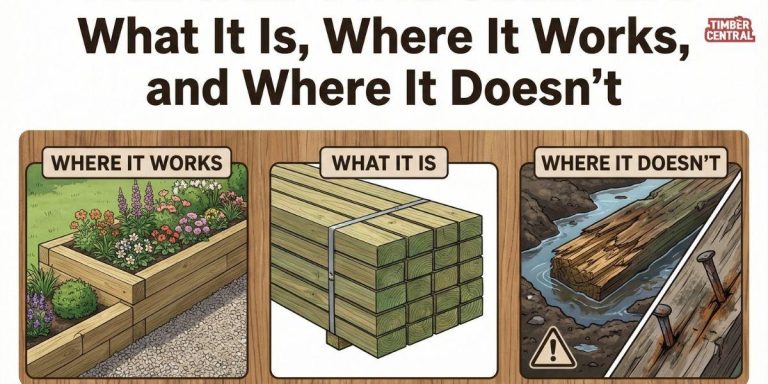
Treated pine is used where timber is exposed to risk. Full stop.
Common treated pine uses include:
- Decking subframes and joists
- Pergolas, verandas, and carports
- External wall framing
- Fence posts and retaining structures
- Bearers near ground level
This is not about preference. These uses are typically governed by building codes, Australian Standards, and termite management requirements.
Trying to save money here usually backfires.
Typical uses of untreated pine
Untreated pine works where the environment is stable and dry.
Typical untreated pine uses include:
- Internal wall framing
- Roof trusses and ceiling joists
- Internal partitions
- Furniture, shelving, and fit-outs
- Temporary bracing and formwork (where permitted)
The key condition is protection. No weather. No moisture exposure. No termite access beyond what is already managed by the overall building system.
The biggest mistake with untreated pine
Using untreated pine in exposed conditions is the most common error. And the most expensive.
The consequences are predictable:
- Accelerated rot
- Increased termite risk
- Structural weakening
- Non-compliance with building requirements
- Warranty disputes
This point matters more than people realise. Once moisture gets involved, untreated pine has no defence.
Compliance considerations and treatment classes
Builders do not choose timber in isolation. Timber selection sits within a compliance framework.
Key factors include:
- Australian Standards (AS 1604, AS 1684)
- National Construction Code (NCC)
- Local council and termite management requirements
- Engineer and certifier specifications
Treatment class selection is dictated by these authorities, not by convenience or cost alone.
This is why experienced suppliers focus on matching timber to application, not pushing one product over another.
At Timber Central, the focus stays practical. Supply timber that aligns with site conditions, hazard class requirements, and approved construction methods. Nothing more. Nothing less.
Treated pine vs untreated pine: how to decide on site
When deciding when to use treated pine, ask three questions:
- Will this timber be exposed to moisture at any point?
- Is it accessible to termites or pests?
- Does the specification or standard require treatment?
If the answer to any of these is yes, treated pine is usually required.
If all answers are no, untreated pine may be acceptable and cost-effective.
It sounds simple. It often isn’t. That’s why checking treatment class and exposure assumptions early saves trouble later.
FAQs
When should builders use treated pine?
Treated pine should be used wherever timber is exposed to weather, moisture, ground contact, or termite risk, or where required by Australian Standards, the NCC, or project specifications.
Is untreated pine suitable for outdoor use?
Generally no. Untreated pine is not designed for external or exposed conditions and typically does not meet durability or compliance requirements for outdoor use.
Can untreated pine be used for framing?
Yes, untreated pine is commonly used for internal wall framing and roof structures where the environment is dry, enclosed, and protected from moisture and pests, subject to compliance requirements.
Is treated pine safe for indoor use?
Yes, treated pine is approved for indoor use when the appropriate treatment class is specified. Lower hazard classes are commonly used for internal applications where required.
Final word
The treated pine vs untreated pine decision is not about preference. It’s about exposure, risk, and compliance.
Most problems come from underestimating moisture and overestimating protection. Experience shows that timber does exactly what conditions allow it to do. Nothing more.
Choose the timber that suits the environment. Follow the standards. Match the treatment class to the risk.
That’s how durable builds are delivered.