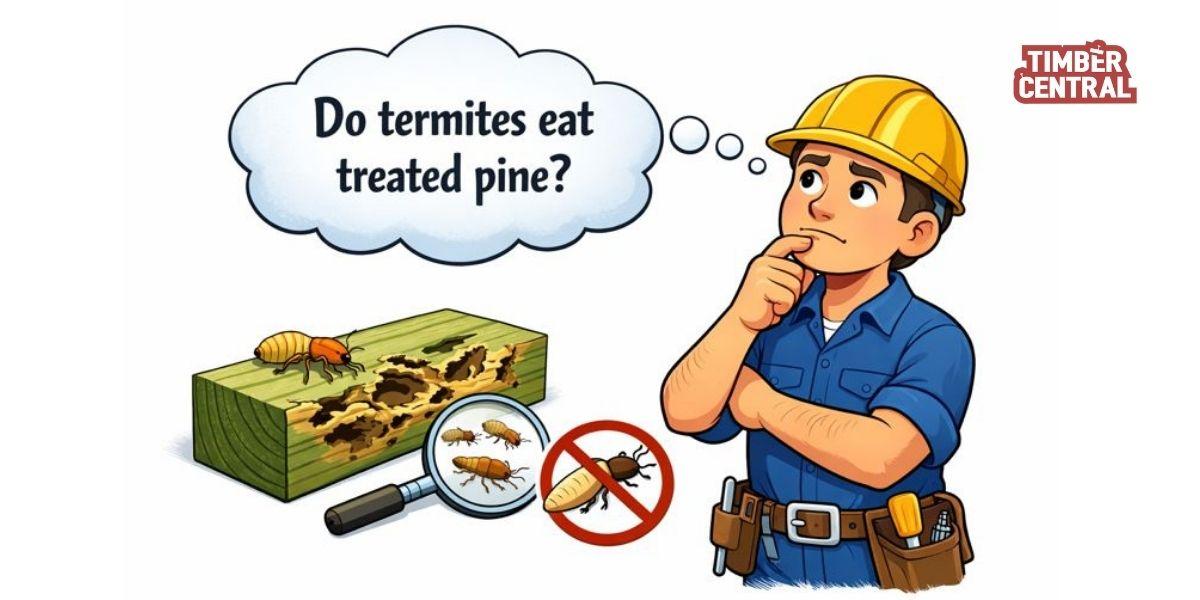
Do Termites Eat Treated Pine?
This question comes up on job sites more often than it should. Usually, right after someone says, “But it’s treated.”
Here’s the reality.
Termites will test treated pine. What happens next depends on how the timber was treated, where it’s used, and whether the rest of the termite management system has been done properly.
The following guide explains how termites and treated pine interact in real building conditions, and where the limits are.
Why termites attack timber in the first place
Termites are not randomly destructive. They are looking for cellulose, and timber provides it in bulk.
But access and moisture matter just as much as species or treatment. Subterranean termites, the main issue across Australia, build mud tubes to reach timber from the ground. They prefer concealed, damp environments, for example, slab edges, penetrations, poorly ventilated subfloors.
If untreated pine is left exposed in these conditions, damage starts fast. Sometimes within months.
What treated pine actually is and how treatment works
Treated pine is plantation pine that has been pressure-treated with preservatives. These chemicals are designed to provide treated pine termite protection against biological threats. Fungi. Insects. Including termites.
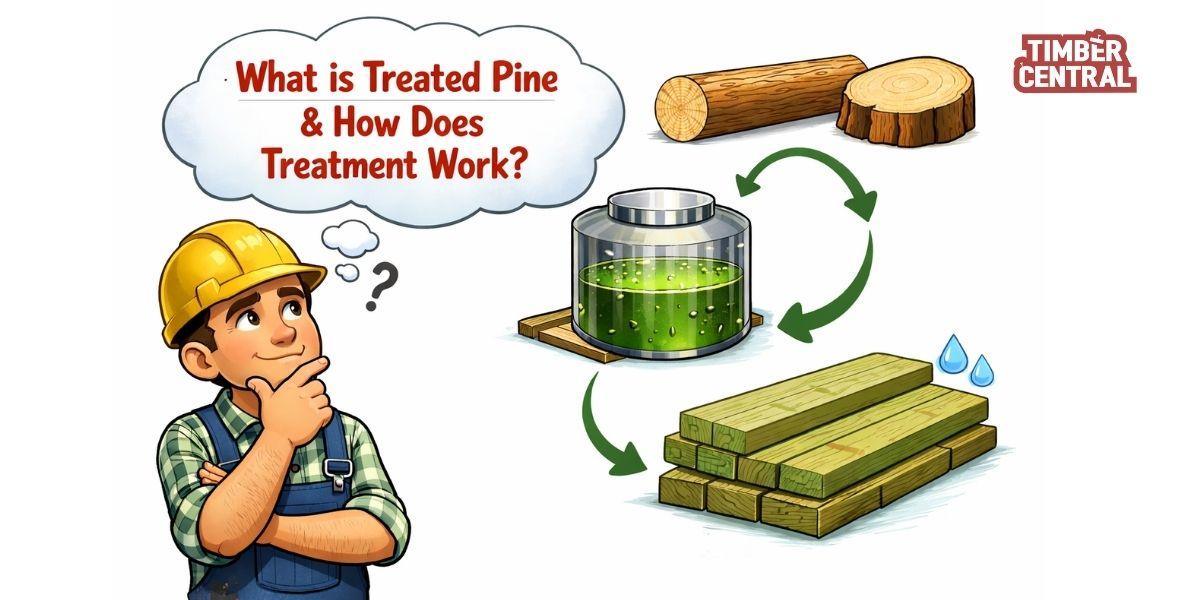
Important distinction: the treatment protects the timber. It does not repel termites from the building.
In Australia, treated pine is classified by Hazard Levels (H1 to H6) under AS/NZS 1604. These levels define where the timber can be used and what it is protected against.
- H1: Interior use only. No termite protection.
- H2: Interior use with termite risk.
- H3: Above-ground external use.
- H4: In-ground contact.
- H5/H6: Heavy-duty in-ground or marine environments.
Using the wrong hazard level is the biggest mistake seen on site.
Can termites eat treated pine?
Yes. Termites can chew treated pine.
But chewing and surviving are different things.
Treated pine contains chemicals or preservatives that are toxic to termites over time. Depending on the hazard level, this can deter feeding, slow damage, or eventually kill termites that ingest enough of it.
What it does not do is instantly stop an attack.
Termites may still tunnel through treated pine, especially if moisture is present or the treatment is compromised. In some cases, they may still cause visible damage before the colony abandons it.
Treated pine is resistant. Not immune.
Termite-resistant vs termite-proof: a critical difference
Termite-resistant treated pine is termite-resistant, not termite-proof. Those words are not interchangeable.
- Termite-resistant means the timber is treated to reduce the risk of termite damage.
- Termite-proof would mean termites cannot damage it at all.
There is no timber product that is termite-proof.
Believing otherwise is the reason builders skip barriers, cut corners on detailing, or assume the frame is “safe enough.” That assumption does not age well.
Understanding treatment levels in real building terms
Most residential framing uses H2-treated pine. It is designed for internal, above-ground use in areas where termites are present.
Used correctly, H2 framing performs well. It is widely accepted under the NCC when installed as part of a compliant termite management system.
But H2 has limits:
- It relies on correct installation.
- It assumes no prolonged moisture exposure.
- It does not replace physical or chemical termite barriers.
Once those assumptions fail, so does the protection.
Where treated pine performs well against termites
In practice, treated pine works best when:
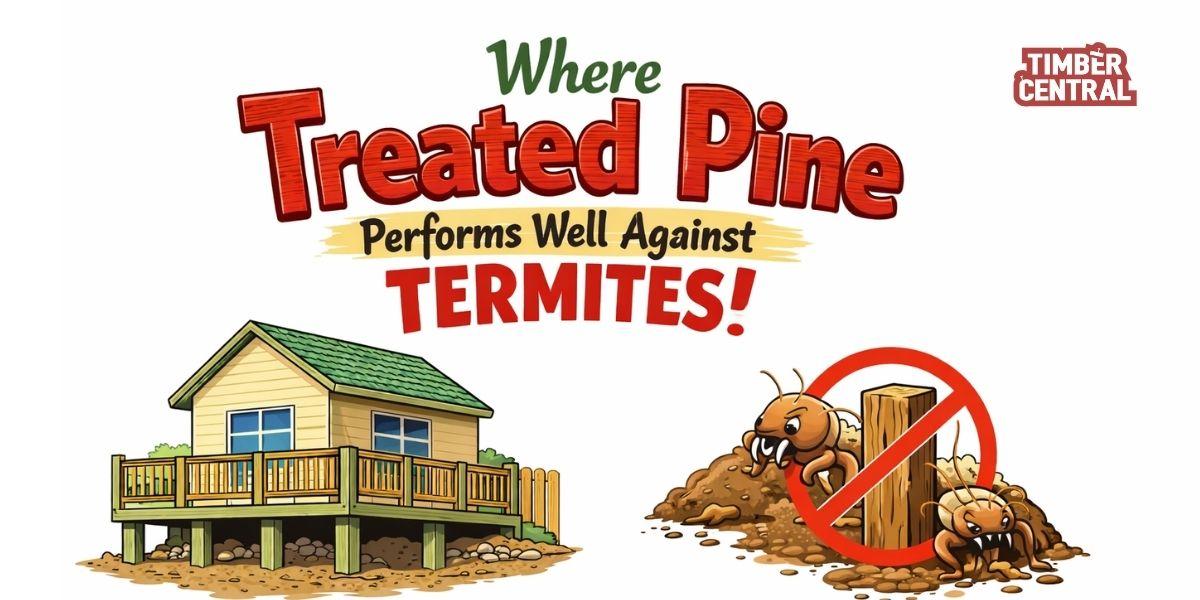
- Used at the correct hazard level
- Kept dry and well ventilated
- Installed above ground as designed
- Combined with compliant termite barriers
What happens when untreated pine is exposed
Leave untreated pine in contact with soil, or bridge a slab edge without protection, and termites do not hesitate. They do not “test” it. They move in.
Frames, packers, temporary bracing, anything untreated left in the wrong place becomes a highway. And once termites establish access, even treated timber nearby can be compromised.
Treated pine still has limits
There are situations where treated pine alone is not enough.
These include:
- Areas with high moisture
- Ground contact applications beyond the timber’s hazard class
- Renovations that introduce concealed access
- Penetrations that bypass slab protection
- Cut or drilled timber not properly resealed
This is why physical and chemical termite barriers remain mandatory, regardless of timber treatment.
Australian regulations are clear. Timber choice does not replace termite management requirements.
The practical takeaway for builders
In the discussion around treated pine vs termites, treated pine is not the problem. Misunderstanding it is.
When selected at the correct hazard level and installed as part of a compliant termite management system, treated pine is a reliable, widely used building material in Australia.
But it is not a standalone solution.
Long-term performance depends on correct treatment, correct detailing, and correct barriers. Miss one element, and termites will eventually find it.
At Timber Central, timber is supplied in line with Australian Standards and regulatory requirements. Material selection must always follow project specifications and authority guidelines. There is no one-size-fits-all answer, and there should not be.
FAQs
Is treated pine termite-proof?
No. It is termite-resistant only. Termites can still attack it under certain conditions.
Can termites damage treated pine over time?
Yes. Especially if moisture is present or access is uncontrolled.
Which treated pine level offers the best termite resistance?
The correct level depends on where and how the timber is used. Hazard classes must match exposure conditions.
Are termite barriers still required with treated pine?
Yes. Barriers are mandatory under Australian building regulations, regardless of timber treatment.