- Your cart is empty
- Continue Shopping

H3 Treated Pine: Everything Builders Need to Know
-
 By
Timber Central
By
Timber Central - Posted on
- 0 comments
- Treated Pine

Table of contents
- What the H3 Rating Actually Means
- How H3 Treatment Protects Timber
- Exposure Conditions Covered by H3 Treatment
- Typical Uses of H3 Treated Pine
- Where H3 Treated Pine Should Not Be Used
- H3 vs H2 Treated Pine
- H3 vs H4 Treated Pine
- Appearance, Finish, and Coating Options
- Lifespan Expectations in Real-World Conditions
- Common Builder Mistakes with H3 Timber
- Australian Standards and Compliance Context
- Frequently Asked Questions
- Final Word for Builders
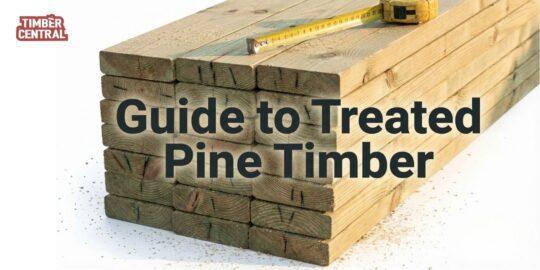
H3 treated pine is one of the most commonly specified timbers in Australian residential construction. It shows up everywhere. Pergolas. External wall frames. Decking substructures that sit just above ground.
And yet, it is also one of the most misused timber treatment levels on site.
This guide breaks it down properly. What H3 treated pine is. What it protects against. Where it performs well. And, just as important, where it does not.
What the H3 Rating Actually Means
The “H” in H3 stands for hazard. Specifically, the biological hazard the timber is expected to face during its service life.
Under AS/NZS 1604, timber treatment levels are matched to exposure conditions. H3 sits in the middle of the scale.
Here’s the plain-English version:
- H3 treated pine is designed for above-ground use
- It can handle weather exposure
- It is not designed for ground contact or persistent moisture
That last point matters more than people realise.
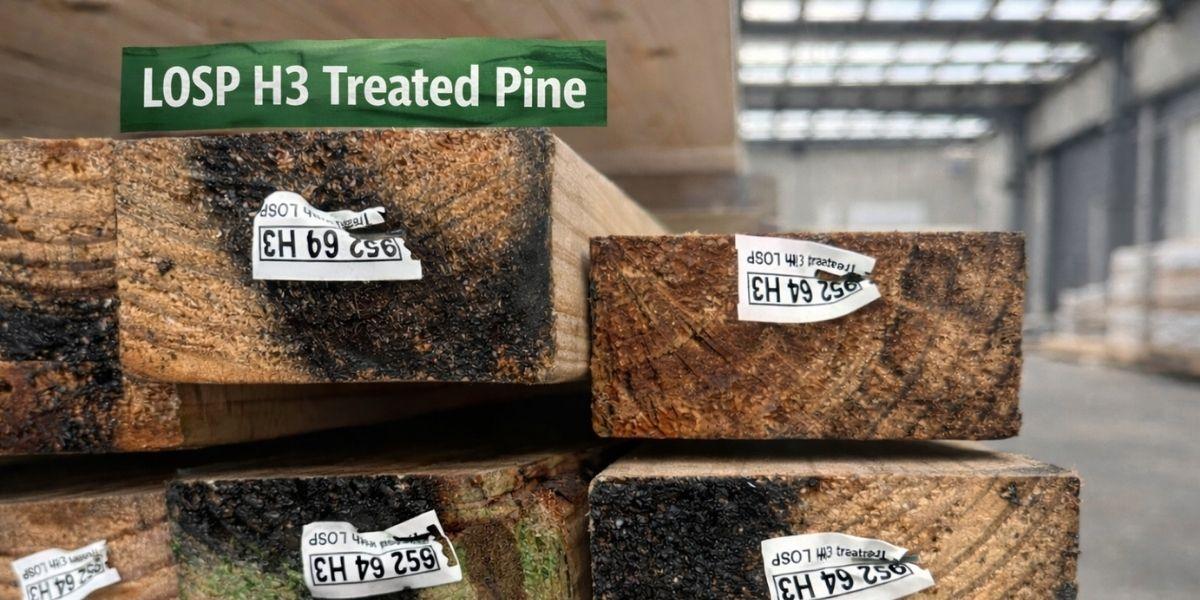
H3 timber is treated to resist decay fungi and insects when exposed to rain, humidity, and occasional wetting.
How H3 Treatment Protects Timber
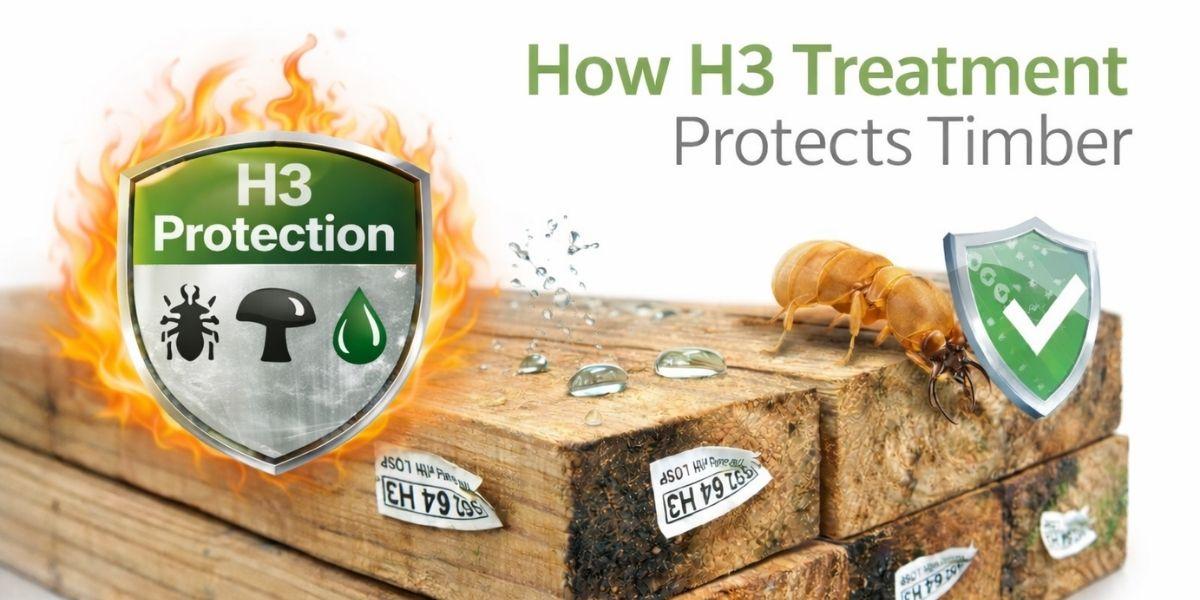
H3 treatment involves pressure-impregnating preservative chemicals into the sapwood of pine. The treatment depth and chemical loading are controlled to meet the H3 hazard class.
What this protection covers:
- Fungal decay caused by moisture exposure
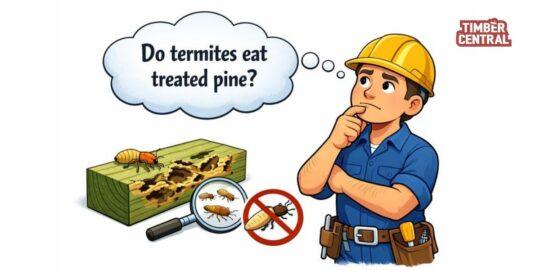
- Termite and insect attack
- Weather-related deterioration in above-ground applications
What it does not cover:
- Continuous moisture
- Water trapped against the timber
- Soil contact
- Poor detailing that prevents drying
While H3 looks robust, performance depends heavily on design, drainage, and ventilation.
Exposure Conditions Covered by H3 Treatment
H3 is intended for external, above-ground environments where timber is exposed to the elements but not permanently damp.
Typical exposure assumptions include:
- Rain wetting followed by drying
- Open airflow around members
- No direct contact with soil or concrete
- No water pooling or entrapment
Think of structures that get wet, then dry. Repeatedly. That drying cycle is critical.
Remove it, and the treatment level is no longer appropriate.
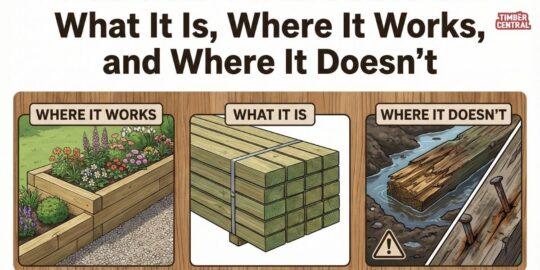
Typical Uses of H3 Treated Pine
When specified correctly, H3 treated pine performs well and is widely accepted under Australian building practices.
Common H3 treated pine uses include:
- Pergolas and verandahs
- Carports and open shelters
- External wall framing (above slab and damp-proof course)
- Decking subframes fully above ground
- Fascia boards and bargeboards
- Exposed outdoor structural members with good airflow
Where H3 Treated Pine Should Not Be Used
This is the most important section in this guide.
H3 treated pine is not suitable for:
- Ground contact
- In-ground posts
- Embedded members
- Retaining walls
- Garden edging
- Deck posts set into concrete
- Any location with constant dampness
This point matters more than people realise.
H3 vs H2 Treated Pine
H2 and H3 are often confused. They are not interchangeable.
H2 treated pine:
- Designed for internal use only
- Protected from weather
- Suitable for wall frames, roof trusses, internal structural members
H3 treated pine:
- Designed for external above-ground use
- Can handle weather exposure
- Requires drying capability
Using H2 outside is a clear non-compliance. Using H3 inside is usually acceptable but unnecessary. Cost and specification should drive that decision.
H3 vs H4 Treated Pine
This comparison causes the most trouble on site.
H4 treated pine is designed for:
- Ground contact
- Constant or frequent moisture exposure
- In-ground posts
- Landscaping structures
H3 treated pine is not.
Although the difference looks minor, it isn’t.
Appearance, Finish, and Coating Options
H3 treated pine typically has a light green tint when freshly treated. That fades over time.
It can be:
- Painted
- Stained
- Oiled
But timing matters.
Freshly treated timber contains moisture. Coatings should only be applied once the timber has dried sufficiently. Rushing this traps moisture. That causes peeling. And long-term problems.
Surface preparation also matters. Clean. Dry. No shortcuts.
Lifespan Expectations in Real-World Conditions
When used correctly, H3 treated pine can last decades.
When used incorrectly, failure can occur surprisingly fast.
The main variables:
- Ventilation
- Drainage
- Detailing
- Correct hazard class selection
H3 timber does not fail because it is “bad timber.” It fails because it is put in the wrong environment.
Common Builder Mistakes with H3 Timber
Some patterns show up again and again.
- Assuming “outdoor” automatically means H3 is enough
- Embedding H3 posts in concrete
- Using H3 near ground level with poor clearance
- Ignoring water traps and drainage paths
- Coating timber before it has dried
In practice, most premature timber failures trace back to one issue. Wrong treatment level for the exposure.
Australian Standards and Compliance Context
In Australia, timber selection is governed by:
- AS/NZS 1604 (preservative treatment)
- NCC requirements
- Local council and engineering specifications
The choice of timber treatment is not discretionary. It must match the exposure conditions defined by the relevant standard.
At Timber Central, guidance aligns with these requirements. The final selection always rests with project specifications, certifiers, and applicable regulations.
Frequently Asked Questions
What is H3 treated pine used for?
Above-ground external applications exposed to weather but able to dry. Pergolas, external framing, and similar structures.
Is H3 treated pine suitable for outdoor use?
Yes. Provided it is above ground and not subject to constant moisture or ground contact.
What is the difference between H3 and H4 treated pine?
H3 is for above-ground exposure. H4 is for ground contact and persistent moisture. They are not interchangeable.
Can H3 treated pine be used in ground contact?
No. Ground contact requires H4 treatment under Australian standards.
Can H3 treated pine be painted or stained?
Yes. Once the timber has dried adequately. Premature coating leads to problems.
Final Word for Builders
H3 treated pine is a reliable, widely used material when specified correctly. It is also one of the easiest to misuse.
The main issue is not the timber. It’s the exposure assumptions.
Get those right, and H3 performs exactly as intended. Get them wrong, and no amount of coating or detailing will save it.
This is where experience counts. And where standards matter.