- Your cart is empty
- Continue Shopping

Choosing the Right Timber for Your Home Renovations in 2026
-
 By
Timber Central
By
Timber Central - Posted on
- 0 comments
- Timber Construction

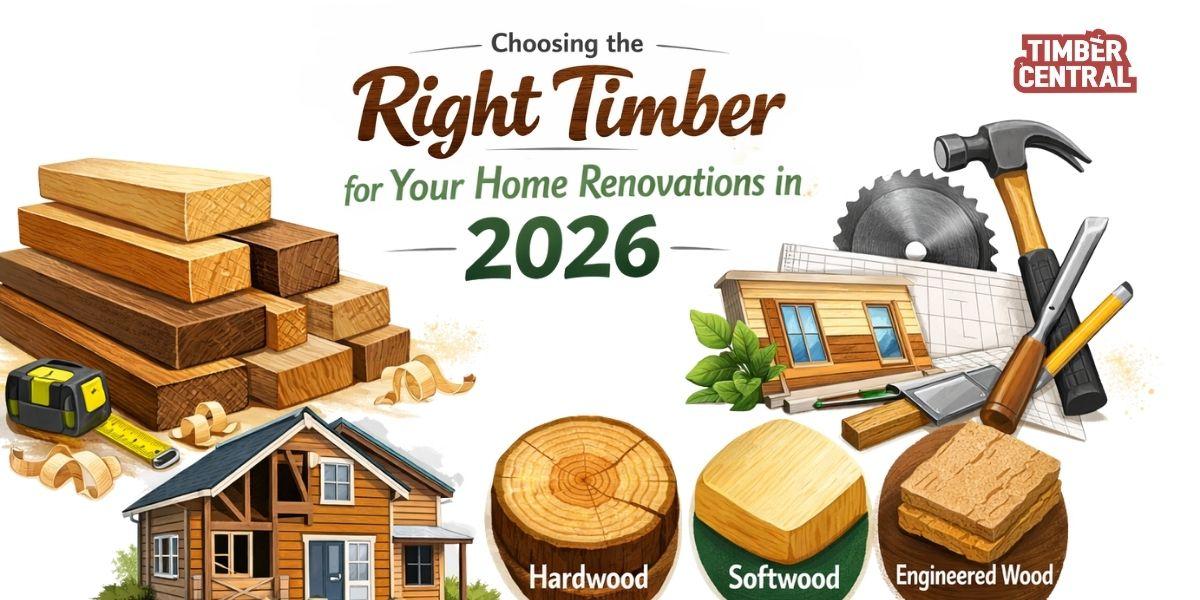
Renovating in 2026 looks exciting on the surface: open layouts, warm textures, and sustainable finishes.
But when the conversation turns to timber, things get complicated, and that too quite fast.
Homeowners walk in asking for the best timber for renovation. Builders want something durable. Designers want character. And everyone assumes there is a simple answer.
There isn’t.
Choosing the right timber for your home renovations in 2026 is not about trends alone. It is about compliance, structure, longevity, and suitability under Australian standards. Miss that, and the renovation becomes expensive in ways no one planned for.
Let’s break this down properly.
Where Do Most Renovations Go Wrong With Timber?
This is the main issue.
People pick timber based on appearance before understanding the application.
It sounds harmless. It isn’t.
Structural areas, load-bearing components, and framing extensions: these fall under regulations and engineering specifications. The requirement for what timber materials for renovation can be used in these areas is dictated by Australian standards, building codes, and engineering approvals.
Not personal preference. Not showroom samples.
While a timber species may look perfect, in practice, it may not meet grading, durability class, or treatment requirements for the job. That decision cannot be made casually. Especially in Melbourne, where compliance matters and inspections are strict.
At Timber Central, discussions always start with one question:
Is this structural or decorative?
Everything flows from there.
Structural Timber for Renovations: What Actually Matters?
When dealing with structural timber for renovations, three things matter more than people realise:
- Structural grading
- Treatment level
- Moisture suitability
Ignore any one of these and problems follow.
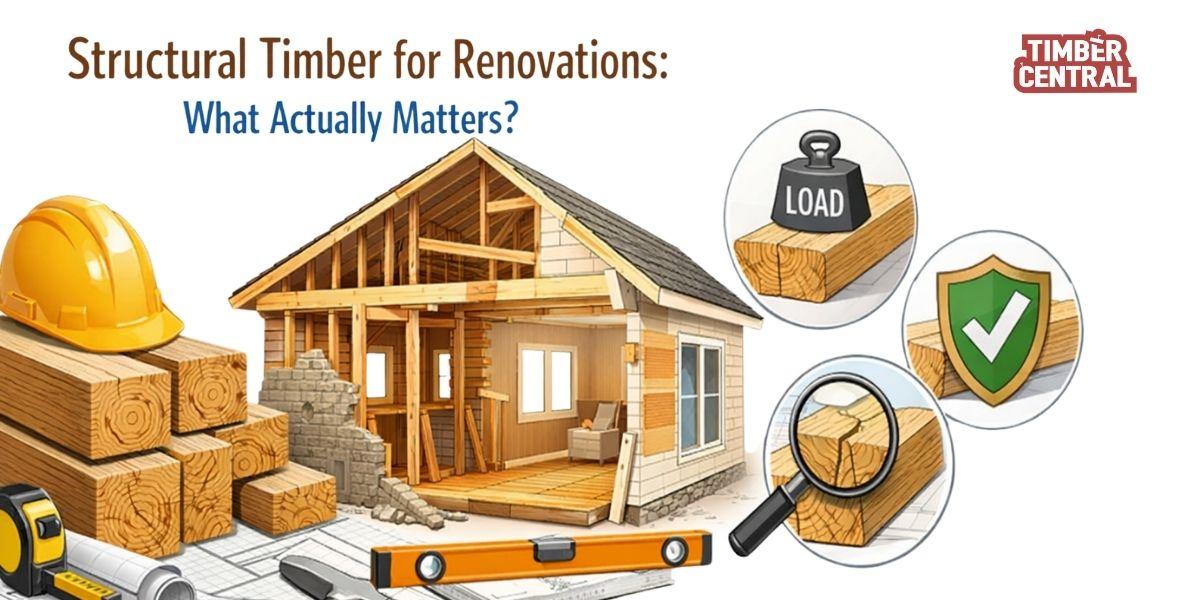
Structural timber must meet engineering specifications and building code requirements. Period. The choice is determined by the design and certified plans, not by preference. That is not negotiable.
Many homeowners assume “hardwood” automatically means “stronger.” Strength in structural applications is about grading and certification, not just species. A properly graded structural softwood can outperform an ungraded hardwood in a load-bearing scenario. This is often misunderstood.
Another trap? Indoor vs outdoor exposure.
Timber used externally or in damp environments requires appropriate treatment levels. In practice, this is rarely checked early enough. Then delays happen, and costs rise.
This point matters more than people realise.
Timber Renovation Ideas for 2026: What’s Changing?
Now, design trends are shifting in 2026. That part is true.
There is a growing demand for:
- Lighter-toned timbers
- Textured finishes
- Sustainable and responsibly sourced materials
- Hybrid use of timber with steel and concrete
But trends should never override compliance. Decorative elements, feature beams (non-structural), ceiling battens, and custom shelving allow more flexibility. This is where aesthetic choice has room to breathe.
Still, even decorative timber materials for renovation need to suit the environment. Many assume decorative means “anything goes.” It usually doesn’t.
How to Choose the Right Timber for Home Renovation Without Regret
This is the biggest mistake seen repeatedly: making the timber decision too early.
Timber should be chosen after:
- Engineering drawings are finalised
- Load requirements are confirmed
- Exposure classifications are known
- Local building regulations are clear
Anything earlier is guesswork.
A smarter approach looks like this:
1. Start With Compliance
Confirm what the building code and engineering plans require. For structural areas, this determines the category of timber needed is not optional.
2. Match Timber to Environment
Is the area internal, external, exposed, or high-moisture? Durability and treatment levels must match the setting.
3. Balance Aesthetic With Performance
Once compliance is satisfied, visual preference can guide the final selection for non-structural elements. Grain pattern, tone, and finish, this is where personality comes in.
4. Consider Long-Term Maintenance
Some timbers demand regular sealing or oiling. Others are lower maintenance. In practice, maintenance is underestimated. Then frustration sets in.
Timber is not just about installation day. It is about the next 15 years.
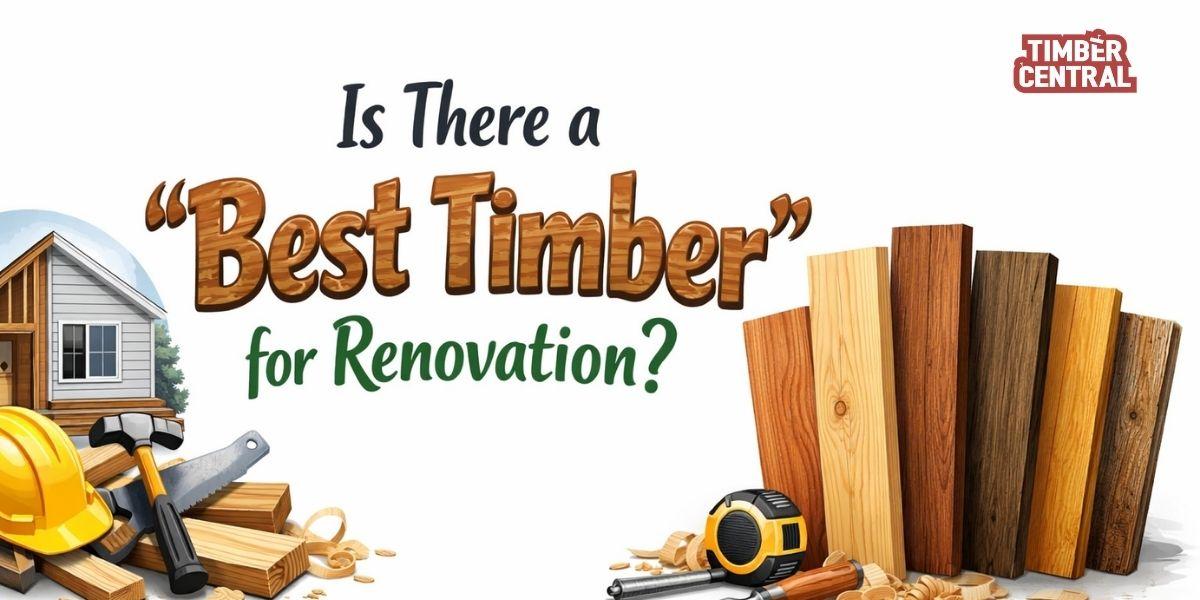
Is There a “Best Timber for Renovation”?
Short answer? No universal winner.
There is only the right timber for the right application, as determined by regulations, environment, and structural requirements.
Anyone claiming that one timber suits every renovation is oversimplifying. And that oversimplification leads to failures: cracking, movement, compliance issues, and sometimes worse.
In Melbourne projects, especially, the combination of climate variation and regulatory oversight means material selection must be deliberate.
The best timber is the one that:
- Meets Australian standards
- Fits engineering requirements
- Performs in its environment
- Aligns with the renovation vision
Miss any one of those, and compromise begins.
Sustainability and Timber in 2026
Sustainability is no longer a marketing line. It is expected.
Responsibly sourced timber, plantation-grown options, and certified supply chains are now central to renovation planning. Many homeowners actively ask for environmentally conscious solutions.
But here is something worth stating clearly. Sustainability does not override structural compliance. It must work within it.
The good news?
Modern timber supply chains make it possible to balance both. Provided the decision process is careful and informed.
Final Thoughts
When it comes to renovations, budgets, timelines and builder availability create pressure.
Timber selection often feels like just another box to tick.
It isn’t.
This decision shapes structural integrity, visual impact, and long-term durability. Rushing it is risky. Taking guidance from experienced suppliers who understand both compliance and performance changes outcomes.
At Timber Central in Melbourne, conversations around the right timber for your home renovations always centre on suitability first, style second. Because when the foundation is correct, everything else follows naturally.
FAQs
What factors determine structural timber suitability?
Structural timber must meet Australian standards, engineering specifications, grading requirements, and appropriate treatment levels for its environment. The final decision is guided by approved building plans and regulatory compliance.
Can decorative timber be used in structural areas?
Only if it meets structural grading and engineering approval requirements. Appearance alone does not qualify timber for load-bearing use.
Does hardwood always perform better than softwood in renovations?
Not necessarily. Performance depends on structural grading, treatment, and suitability for the specific application, not just the species.
How important is timber treatment in renovations?
Very important. Treatment levels protect against moisture, pests, and environmental exposure. Using untreated timber in exposed conditions is a common and costly mistake.
Are sustainable timber options available for renovations in 2026?
Yes. Responsibly sourced and certified timber options are widely available. However, sustainability considerations must still align with compliance and structural requirements.