- Your cart is empty
- Continue Shopping

Complete Checklist: What to Look for When Buying Timber in Australia
-
 By
Timber Central
By
Timber Central - Posted on
- Structural Timber

Table of contents
- 1. Is the Timber Compliant with Australian Standards?
- 2. What Grade Are You Actually Getting?
- 3. Has the Timber Been Properly Seasoned?
- 4. Is the Treatment Level Suitable for the Environment?
- 5. What Species or Type Is Being Supplied?
- 6. Are There Visible Defects That Matter?
- 7. Is the Supplier Providing Clear Documentation?
- 8. How Will the Timber Be Stored and Handled After Purchase?
- Final Words
- FAQs
Buying timber sounds straightforward. Walk in, pick a few lengths, load up, done.
But that’s how problems start.
Timber is not just a material. It’s regulated, graded, treated, and often misunderstood. And in Australia, those details matter more than people realise.
If you miss one step, the consequences don’t show up immediately. They show up months later and sometimes years.
So the right question isn’t “What timber should be bought?”
It’s this: “What needs to be checked before committing?”
Let’s break it down properly.
1. Is the Timber Compliant with Australian Standards?
Timber in Australia must meet strict standards for structural use, durability, and treatment. That includes grading, moisture levels, and suitability for specific conditions.
But not all timber on the market is equal, even if it looks identical.
Many assume that if it’s being sold, it must be compliant. It usually is, but not always for the intended use.
This is where most people get caught out. Timber might be suitable for indoor framing but completely wrong for external exposure. On paper, it looks fine. In practice, it fails.
Always check:
- Relevant Australian Standard markings
- Structural grading (if applicable)
- Supplier documentation
No shortcuts here. Compliance is non-negotiable.
2. What Grade Are You Actually Getting?
Timber grading is often misunderstood. Even among experienced buyers.
Structural timber is graded based on strength. Appearance-grade timber? That’s a different conversation altogether. Clean finish, fewer knots, better visual consistency.
A piece of timber can be structurally sound but visually rough. Or visually perfect but not intended for load-bearing use. Mixing those up leads to poor outcomes. In reality, misinterpretation of grades is one of the most common purchasing mistakes.
Check the grade. Then confirm it matches the intended purpose, not what it looks like, but what it’s rated for.
3. Has the Timber Been Properly Seasoned?
Moisture content is where things quietly go wrong.
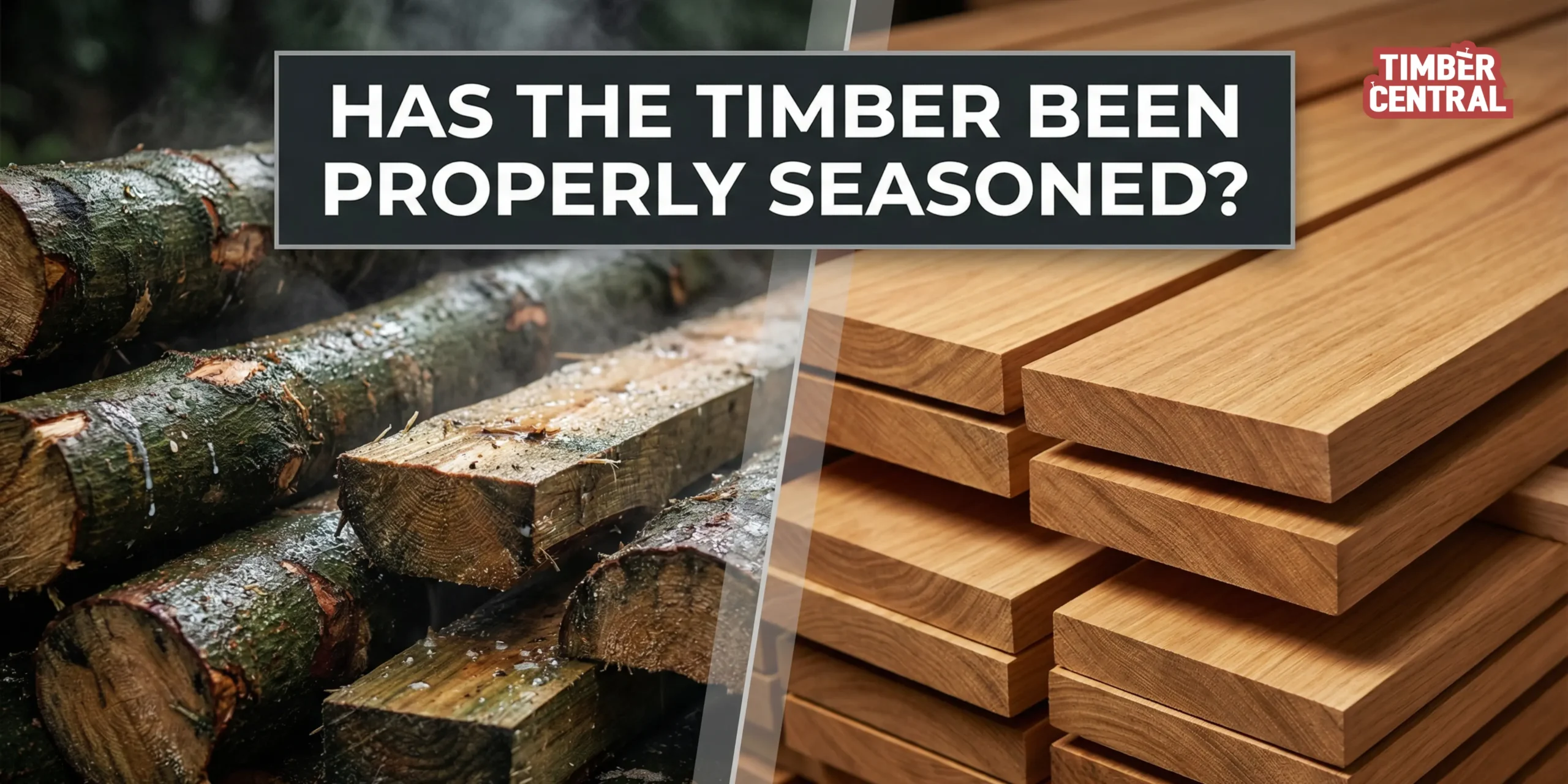
Fresh timber holds moisture. As it dries, it moves, and with it come issues like warping, twisting, and shrinking (sometimes all three).
Kiln-dried or seasoned timber is more stable. But even then, storage conditions matter.
Here’s what tends to happen. Timber is bought dry… then stored poorly on-site. It absorbs moisture again. Movement follows.
That’s not a supplier issue. That’s handling. So check:
- Moisture level (especially for internal use)
- Whether it’s kiln-dried or air-dried
- Storage conditions before purchase
4. Is the Treatment Level Suitable for the Environment?
Timber treatment is not optional in many cases. It’s regulated.
Australia uses hazard classes (H1–H6) to define where and how timber can be used. Indoor, outdoor, ground contact, and marine exposure each has different requirements.
Many assume treated timber is universally suitable. It isn’t.
Example. Timber treated for indoor termites (H2) will not hold up outdoors.
And here’s the important part. The correct treatment level isn’t a preference. It’s determined by regulations and guidelines. So, check the hazard class. Confirm it aligns with the intended environment. If there’s uncertainty, clarify before purchase.
5. What Species or Type Is Being Supplied?
This is where expectations and reality often clash.
Different timber species behave differently. Density, durability, and workability vary. But selection is not always about preference.
For many structural or regulated applications, the type of timber must align with approved standards and engineering specifications. It’s not a free choice.
This is often misunderstood. Clients ask for a specific species based on appearance or cost. But compliance comes first.
So instead of asking “Which timber is better?”, the better question is:
“What timber meets the required standards for this application?”
That shift avoids problems early.
6. Are There Visible Defects That Matter?
Not all imperfections are equal.
Knots, splits, checks, and surface marks are common. Some are acceptable within grading limits, while others are not.
Here’s where judgment matters.
- A small knot in non-structural timber? Usually fine.
- A significant split in structural timber? That’s a problem.
Many buyers either overreact or overlook defects entirely. Both are mistakes.
Inspect for:
- Cracks that compromise strength
- Excessive warping
- Signs of decay or insect damage
If something looks off, it probably is. Timber does not “fix itself” after installation.
7. Is the Supplier Providing Clear Documentation?
This gets ignored more often than it should.
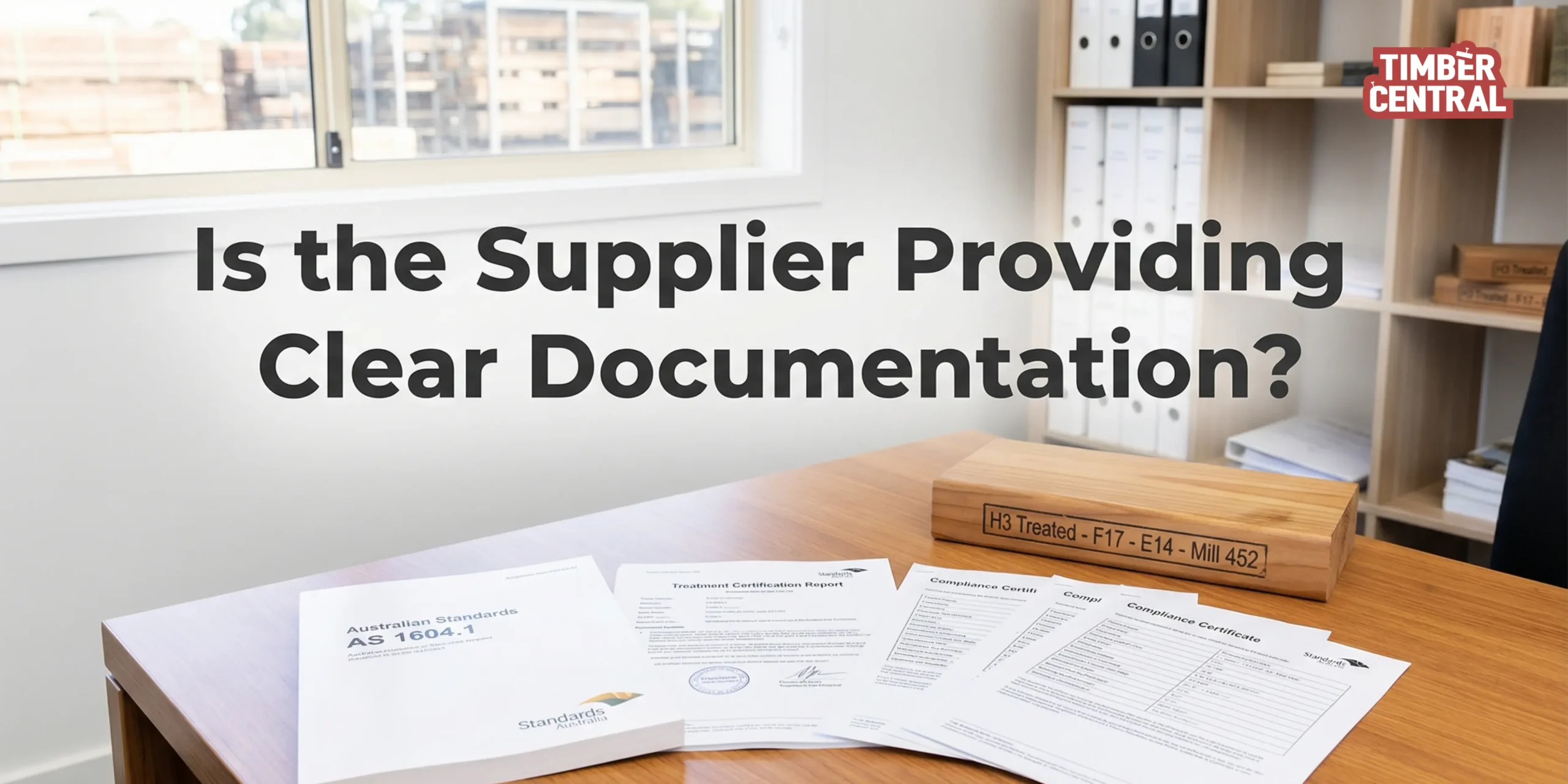
Reputable suppliers provide:
- Treatment certification
- Grading information
- Compliance details
Without documentation, verification becomes guesswork. And guesswork has no place in construction.
This is often where risks creep in quietly. Everything looks fine, until proof is needed. Then it’s missing.
8. How Will the Timber Be Stored and Handled After Purchase?
Even high-quality timber can degrade if stored incorrectly. Exposure to moisture, direct sunlight, or uneven support leads to movement and damage.
This isn’t theory. It happens regularly. Basic handling matters.
- Keep timber elevated off the ground
- Protect from rain and direct exposure
- Store flat and supported evenly
Neglect this, and the quality paid for starts disappearing immediately.
Final Words
At Timber Central, based in Melbourne, the focus remains simple: supply timber that meets Australian standards and complies with regulatory requirements.
Because at the end of the day, timber choice is not about preference alone. It’s about compliance, suitability, and long-term performance.
Everything else is secondary.
FAQs
How can timber compliance be verified before buying?
Check for certification stamps, supplier documentation, and references to relevant Australian Standards. If documentation isn’t available, that’s a red flag.
What does timber grading actually indicate?
Grading defines strength and suitability for specific uses. Structural grades relate to load-bearing capacity, while appearance grades focus on visual quality.
Why is moisture content important in timber?
Moisture affects stability. High moisture leads to warping and shrinkage over time. Properly seasoned timber reduces these risks significantly.
Is treated timber always suitable for outdoor use?
No. Treatment levels vary. Timber treated for indoor use may fail outdoors. Always match the hazard class to the environment.
Can timber be chosen based on preference alone?
Not for regulated applications. Timber selection must comply with standards and guidelines. Preference comes after compliance.
What are the common visible defects to watch for?
Look for deep cracks, excessive warping, decay, or insect damage. Minor surface imperfections may be acceptable, depending on the grade.
Does storage after purchase really make a difference?
Yes. Poor storage can undo the quality of the timber quickly. Proper handling is essential to maintain performance and stability.