- Your cart is empty
- Continue Shopping

Can You Burn Treated Pine? What You Need to Know
-
 By
Timber Central
By
Timber Central - Posted on
- Treated Pine

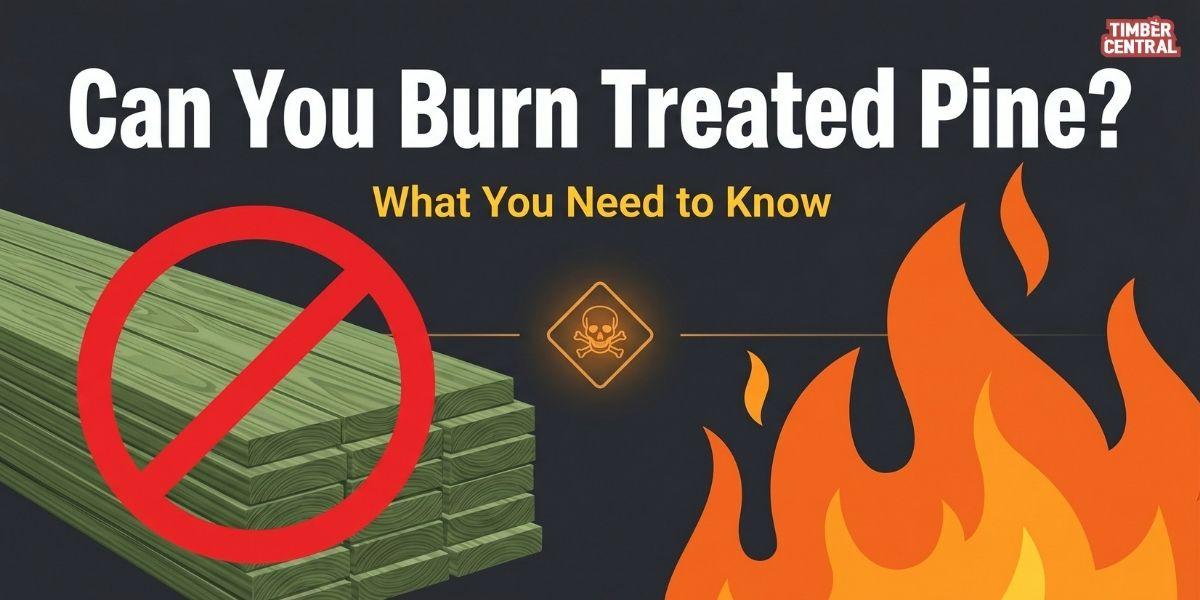
Table of contents
Treated pine is one of the most widely used timber products in Australia. It is valued for its durability, resistance to decay, and ability to withstand termite attack. But when projects are finished, and offcuts start piling up, one question comes up again and again:
Can you burn treated pine?
The short answer is no. Treated pine should not be burned in fireplaces, wood heaters, fire pits, or outdoor bonfires.
That answer sounds straightforward. The reasons behind it are where things become important.
Why Burning Treated Pine Is a Serious Concern
Treated pine is timber that has been infused with preservatives to improve its lifespan and performance. Depending on the treatment type, those preservatives may contain chemicals designed to protect the wood from fungi, insects, and moisture-related damage.
When treated timber is burned, those chemicals do not simply disappear. Instead, they can be released into the air through smoke, ash, and airborne particles.
Many people focus on the wood itself and assume that if it burns like ordinary timber, it must be safe. While that may sound reasonable, in practice it is not.
The preservatives used in treated pine can produce potentially hazardous emissions when exposed to high temperatures. The resulting smoke may contain substances that are harmful to people, pets, and the surrounding environment.
Understanding the Risks Behind Treated Pine Smoke
One of the main concerns with burning treated pine is the smoke it creates.
Depending on the treatment method and age of the timber, smoke can carry chemical residues that were originally embedded in the wood. These contaminants may spread beyond the immediate fire area and affect nearby properties, outdoor spaces, and gardens.
The ash presents another issue.
Many people assume ash can be scattered around gardens or composted. That may be appropriate for untreated timber ash, but treated timber is different. Ash from burned treated pine can contain concentrated chemical residues and should never be treated like ordinary wood ash.
But the danger is not always obvious.
Smoke drifts away. Ash cools down. The immediate fire disappears. Yet the chemicals released during combustion can remain a concern long after the flames are gone.
Why Fire Pits Are Not an Exception
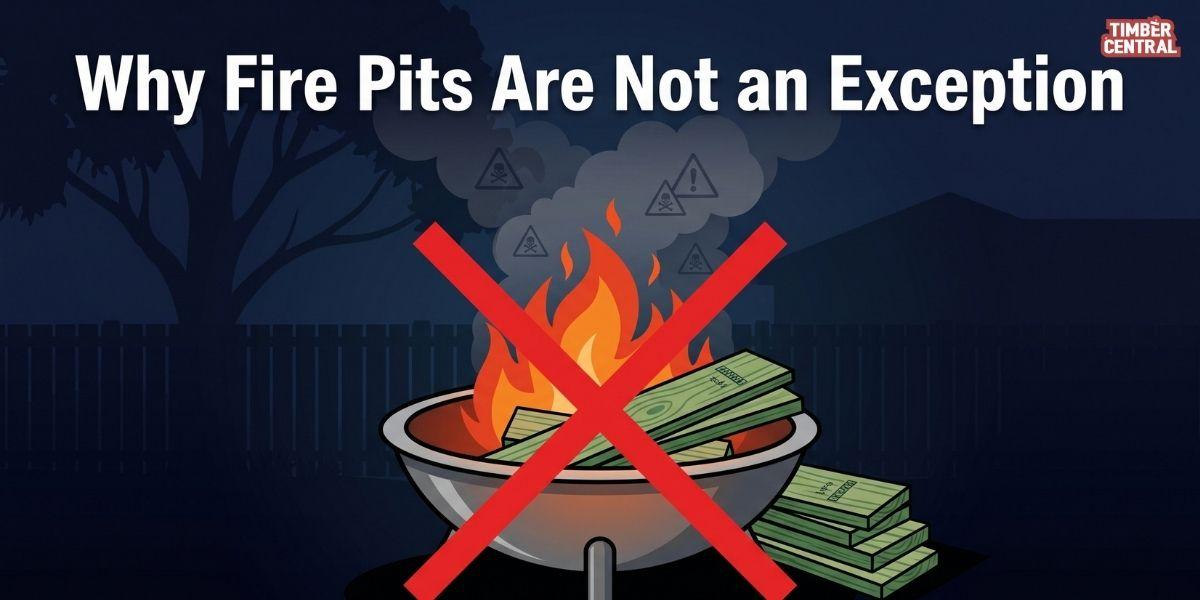
A common misconception is that outdoor fire pits are somehow safer than indoor fireplaces when it comes to treated timber.
They are not.
Whether the fire is inside a wood heater or outside in the backyard, the treatment chemicals are still exposed to combustion temperatures. The same concerns around smoke and contaminated ash remain.
This is often misunderstood because outdoor fires feel less confined. However, open-air burning can actually spread smoke and particles over a wider area.
Many local councils and environmental authorities specifically discourage or prohibit the burning of treated timber for this reason.
How to Identify Treated Pine Before Disposal
Treated pine often carries identifying marks, stamps, tags, or treatment classifications that indicate it has undergone a preservation process. Green-tinted timber is commonly associated with treatment, although colour alone should never be used as the only indicator.
Older pieces of timber can be particularly difficult to identify. Weathering may remove visible clues, making treated timber look similar to untreated wood.
When uncertainty exists, caution is the safer approach.
In practice, questionable timber should never be added to a firewood pile simply because its treatment status cannot be confirmed.
What Should Be Done With Leftover Treated Pine?
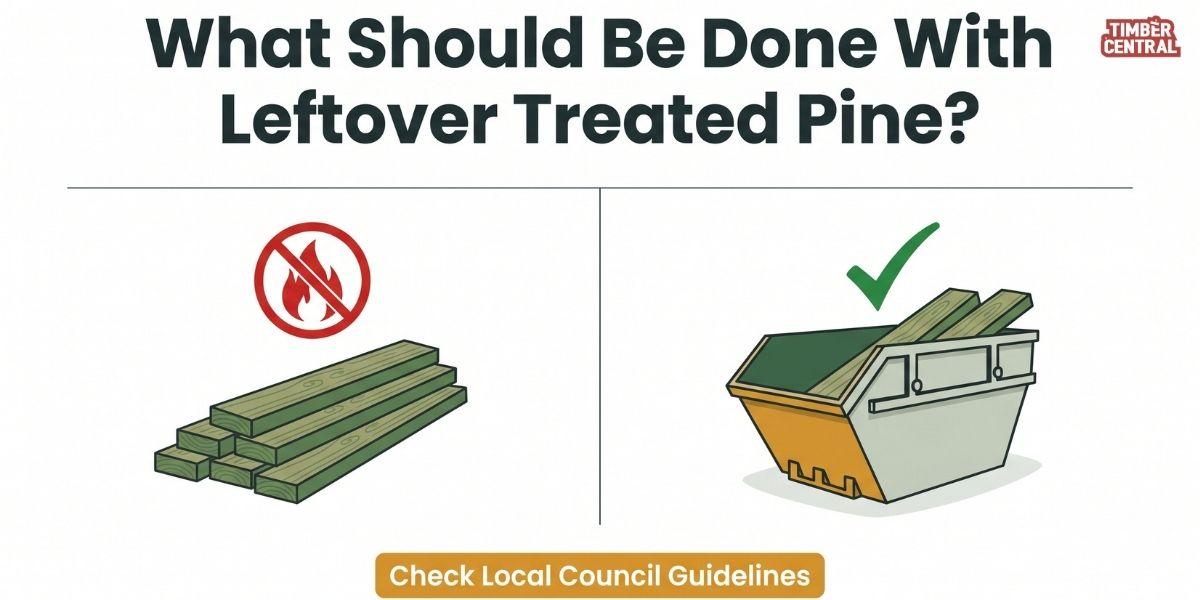
Safe disposal is the recommended approach.
Environmental authorities generally advise against placing treated timber into household combustion systems or open fires. Instead, treated pine should be disposed of through approved waste management channels that can handle treated timber appropriately.
However, the assumption is often that timber is timber. As a result, treated offcuts end up mixed with ordinary green waste, firewood stacks, or backyard burn piles.
That can create environmental and regulatory issues.
Local disposal requirements may vary depending on location, so checking council or environmental authority guidelines is always worthwhile before disposal. Following those requirements helps ensure treated timber is managed safely and responsibly.
The Bottom Line on Burning Treated Pine
So, can you burn treated pine?
No. Treated pine should not be burned in fireplaces, wood heaters, outdoor fire pits, burn barrels, or bonfires.
The primary concern is the release of chemicals through smoke and ash. Those risks extend beyond the fire itself and can affect people, animals, and the surrounding environment.
Many people assume small amounts are harmless. Experience across the industry suggests otherwise. Safe disposal remains the appropriate course of action.
When dealing with treated timber, disposal decisions matter just as much as construction decisions. Overlooking that final step can create problems that are entirely avoidable.
Choosing the right timber is only part of the equation. Understanding how timber should be handled, maintained, and disposed of is just as important. Timber Central supplies quality timber products across Melbourne and can help answer questions about timber specifications, applications, and product suitability. Contact the team today to discuss your project requirements and find the right solution for the job.
FAQs
Is it illegal to burn treated pine?
In many areas, burning treated timber is restricted or prohibited under environmental regulations. Requirements vary between councils and jurisdictions, so local rules should always be checked before disposing of timber through burning.
What happens if treated pine is burned?
Burning treated pine can release chemical contaminants into the smoke and leave potentially hazardous residues in the ash. These emissions may pose risks to human health and the environment.
Can treated pine be used in fire pits?
No. Treated pine should not be used in fire pits. The same concerns regarding chemical release and contaminated ash apply whether the fire is indoors or outdoors.
How should treated pine be disposed of safely?
Treated pine should be taken to approved waste disposal or recycling facilities that accept treated timber. Local council and environmental authority guidelines can provide information on suitable disposal options in a specific area.