- Your cart is empty
- Continue Shopping

What Is Yellow Tongue Flooring? A Builder’s Guide

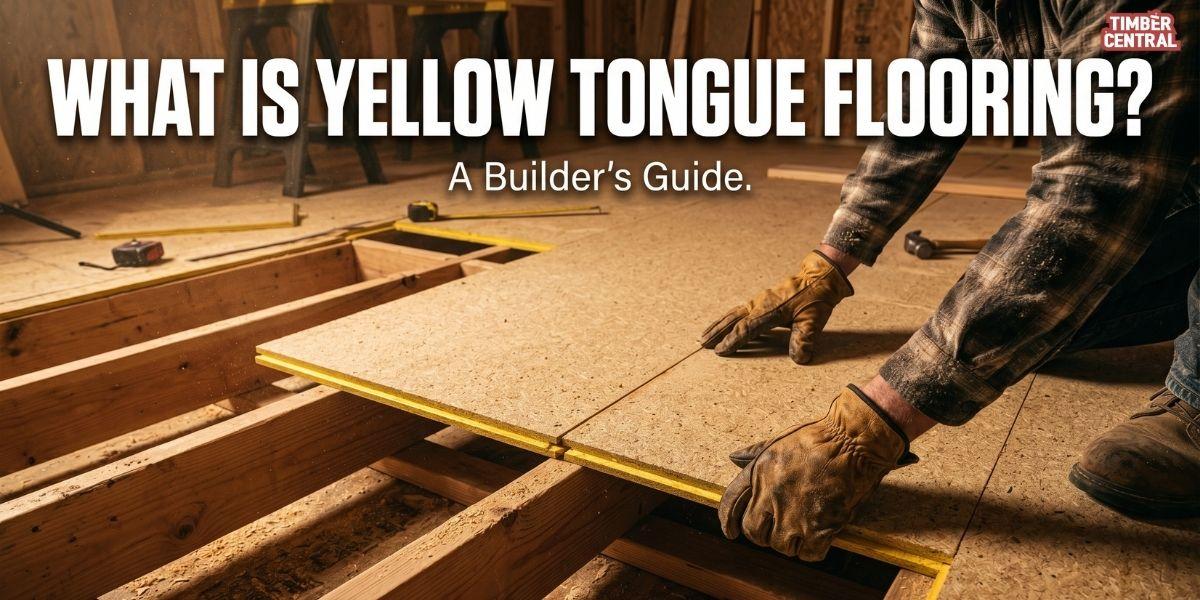
Table of contents
- What Exactly Is Yellow Tongue Flooring?
- What Are Yellow Tongue Flooring Boards Made From?
- Why Do Structural Flooring Boards Use Colour Coding?
- Where Is Yellow Tongue Flooring Commonly Used?
- Understanding Moisture Resistance and Site Exposure
- Yellow Tongue vs Red Tongue Flooring: What Is the Difference?
- Installation Considerations That Prevent Problems Later
- Choosing a Reliable Flooring Supplier
- Final Thoughts
- FAQs
A floor system is only as good as the structure beneath it. Yet when conversations turn to subfloors, many builders, renovators, and owner-builders find themselves asking the same question: what is yellow tongue flooring, and why is it specified so often in Australian residential construction?
The answer seems straightforward. In reality, there is more to it than most people expect.
Questions about structural grades, moisture resistance, weather exposure, and installation requirements come up on projects of every size. Some assumptions are harmless. Others can lead to costly mistakes, unnecessary rectification work, and delays that could have been avoided from the start.
This guide breaks down what yellow tongue flooring is, how it works, where it is commonly used, and the key considerations that matter before installation begins.
What Exactly Is Yellow Tongue Flooring?
Yellow tongue flooring is a type of structural particleboard flooring designed to be installed over floor joists as a load-bearing subfloor. It is commonly used in residential construction, particularly for elevated floors in timber-framed homes, renovations, extensions, and multi-level dwellings.
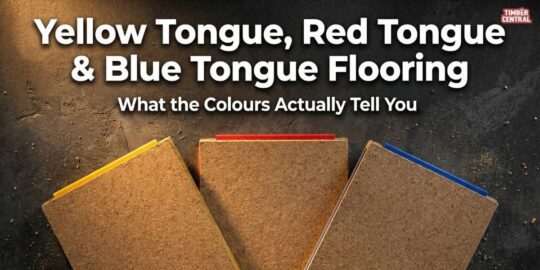
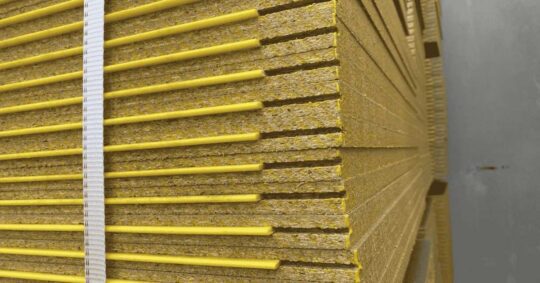
The term “yellow tongue” comes from the coloured tongue edge found along the board. This colour coding identifies a specific structural grade within the flooring system.
Many builders refer to these products simply as yellow tongue flooring boards, but the technical classification is structural particleboard flooring manufactured to Australian standards.
However, yellow tongue flooring is not a finished floor surface. It forms the structural platform that sits beneath floor coverings such as timber flooring, carpet, laminate, hybrid flooring, or vinyl.
What Are Yellow Tongue Flooring Boards Made From?
Yellow tongue particleboard flooring is manufactured from compressed wood particles bonded together with specialised resins under high pressure and heat. The result is a dense, engineered flooring panel designed to provide structural strength while maintaining dimensional stability.
Each board typically features a tongue and groove profile that allows adjoining sheets to lock together securely. This creates a continuous flooring platform while helping distribute loads across the floor system.
Because the product is engineered rather than cut from a single piece of timber, consistency is one of its major advantages. Builders can expect uniform dimensions, predictable performance, and efficient installation.
Why Do Structural Flooring Boards Use Colour Coding?
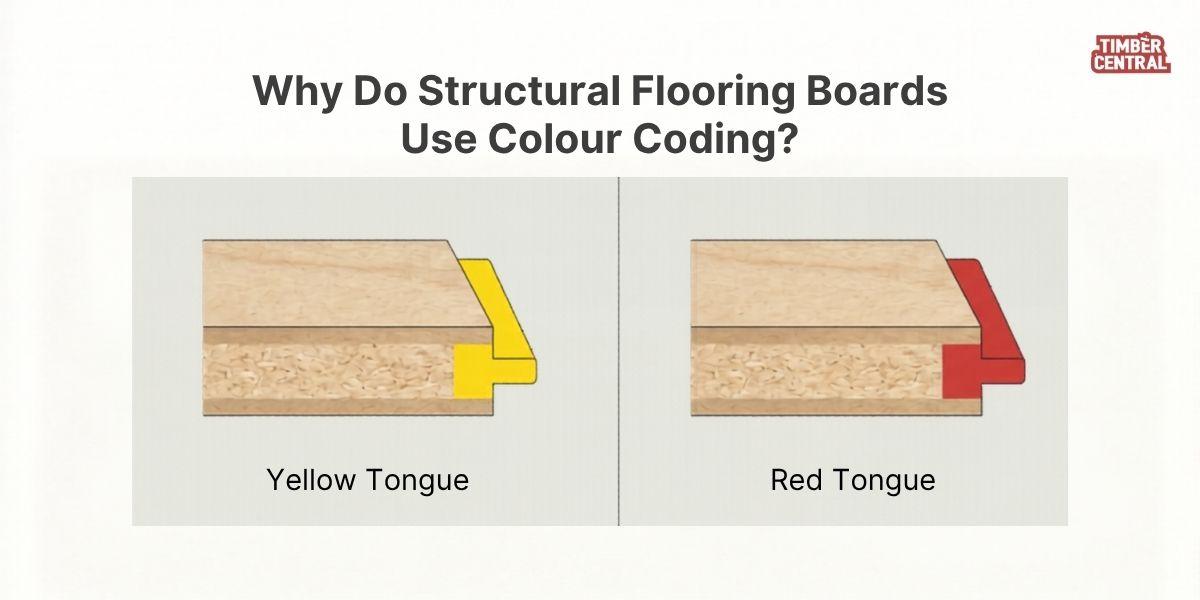
Colour coding helps identify the structural grade and intended application of flooring particleboard. On busy construction sites, quick identification matters. Builders, installers, and inspectors need an easy way to verify that the correct flooring board has been supplied and installed.
Yellow tongue and red tongue flooring are two of the most recognised examples.
The colour itself does not improve performance. Instead, the coloured tongue acts as a visual identifier that helps distinguish between flooring grades with different structural capacities and installation requirements.
Note: Always refer to the manufacturer’s specifications and relevant building regulations when determining suitability for a particular project. Structural requirements vary depending on span, loading conditions, and design criteria.
Where Is Yellow Tongue Flooring Commonly Used?
Yellow tongue flooring uses are primarily found in residential construction, where a strong structural subfloor is required.
Common applications include:
- New home construction
- First-floor and upper-level flooring systems
- Raised timber floor structures
- Home extensions
- Renovation projects
- Townhouse developments
- Residential multi-level buildings
Yellow tongue flooring is often selected because it provides a reliable working platform during construction while also forming the structural base for the finished floor system.
Understanding Moisture Resistance and Site Exposure
One of the most important questions surrounding yellow tongue flooring relates to moisture.
But moisture-resistant flooring boards are not the same thing as waterproof flooring boards.
Yellow tongue flooring is manufactured with moisture-resistant properties designed to help the board withstand the normal conditions encountered during construction. This allows builders some flexibility when weather conditions are less than ideal.
However, moisture resistance has limits.
Many people assume that because the product can tolerate some exposure, it can be left uncovered indefinitely. It usually cannot.
Extended exposure to rain, standing water, poor site drainage, or prolonged wet conditions can affect board performance and may create swelling or other issues that require remediation before floor coverings are installed.
Manufacturer guidelines and construction regulations should always be followed regarding weather exposure, storage, and protection during installation.
Yellow Tongue vs Red Tongue Flooring: What Is the Difference?
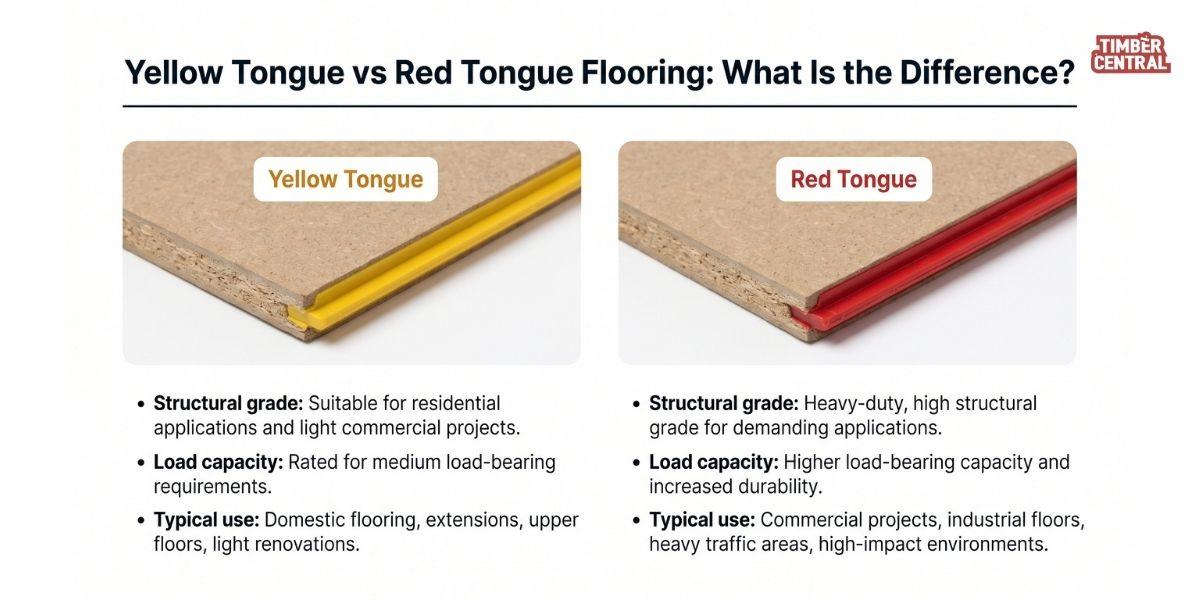
Builders frequently compare yellow tongue and red tongue flooring when planning floor systems.
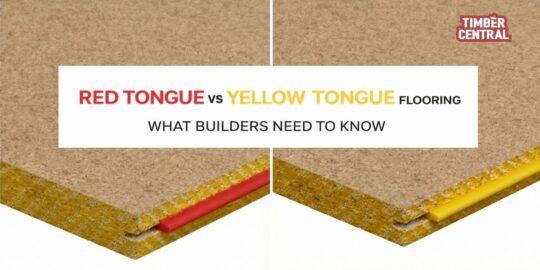
The primary difference relates to structural grading and load capacity classifications. While both products are structural flooring boards, they are designed to satisfy different engineering requirements.
Red tongue flooring is generally associated with higher load capacities than yellow tongue products. The appropriate choice depends on factors such as joist spacing, floor design, loading requirements, and project specifications.
This is not an area where assumptions should be made.
Installation Considerations That Prevent Problems Later
Most flooring failures do not happen because the board itself is defective. Installation issues are usually responsible.
1. Incorrect Storage Before Installation
Boards should be stored according to manufacturer recommendations and protected from excessive moisture before installation begins. Improper storage can introduce problems before the flooring is even laid.
2. Ignoring Expansion Requirements
Particleboard flooring requires appropriate allowances for expansion and movement. Insufficient expansion gaps can contribute to floor movement issues as environmental conditions change.
3. Poor Adhesive Application
Where adhesive systems are specified, correct application is essential.
Uneven application or missed sections can compromise floor performance and create unwanted movement or noise.
4. Delayed Weather Protection
Temporary exposure may be permitted within manufacturer guidelines, but leaving flooring exposed for extended periods increases risk. The longer structural flooring remains exposed, the greater the chance that avoidable issues will develop.
5. Overlooking Manufacturer Specifications
Every flooring system comes with installation requirements. Many experienced contractors review these specifications carefully, even when using products they have installed countless times before. Small details can vary between manufacturers.
That extra attention often prevents expensive corrections later.
Choosing a Reliable Flooring Supplier
Quality structural flooring starts with quality supply. Builders need consistent stock availability, dependable product information, and access to flooring solutions that meet Australian standards and project requirements.
At Timber Central, supplying builders, contractors, carpenters, and renovators across Melbourne involves more than simply delivering flooring materials. Accurate product guidance, reliable supply, and practical industry knowledge help keep projects moving.
Most importantly, flooring selection should always align with the specifications, regulations, engineering requirements, and authority guidelines applicable to the project.
Final Thoughts
Yellow tongue flooring has earned its place as one of Australia’s most widely used structural flooring solutions for good reason.
It provides a strong and consistent subfloor platform, supports efficient construction practices, and performs reliably when installed correctly and protected according to manufacturer requirements.
The important thing is understanding what the product is designed to do and what it is not designed to do.
Many site issues stem from unrealistic expectations about moisture exposure or assumptions about structural grades. Avoid those mistakes, follow project specifications, and the flooring system is far more likely to deliver the performance builders expect.
FAQs
What is yellow tongue flooring used for?
Yellow tongue flooring is primarily used as a structural subfloor in residential construction. It is commonly installed over floor joists to create a load-bearing platform before the final floor covering is applied.
Is yellow tongue flooring waterproof?
No. Yellow tongue flooring is moisture-resistant, not waterproof. It can tolerate limited exposure during construction when managed correctly, but prolonged exposure to water or wet conditions can cause problems.
What is the difference between yellow tongue and red tongue flooring?
The main difference is structural grading and load capacity. Both are structural particleboard flooring products, but they are designed for different engineering and performance requirements. Project specifications and relevant regulations should determine which product is appropriate.
Can yellow tongue flooring be left exposed to the weather?
Yellow tongue flooring may tolerate temporary weather exposure within manufacturer guidelines, but it should not be considered a permanently exposed flooring solution. Excessive or prolonged exposure to rain and moisture can affect performance and may require corrective action.