- Your cart is empty
- Continue Shopping

The Structural Advantages That F22 Hardwood Bracing Ply Offers
-
 By
Timber Central
By
Timber Central - Posted on
- F22 Bracing ply

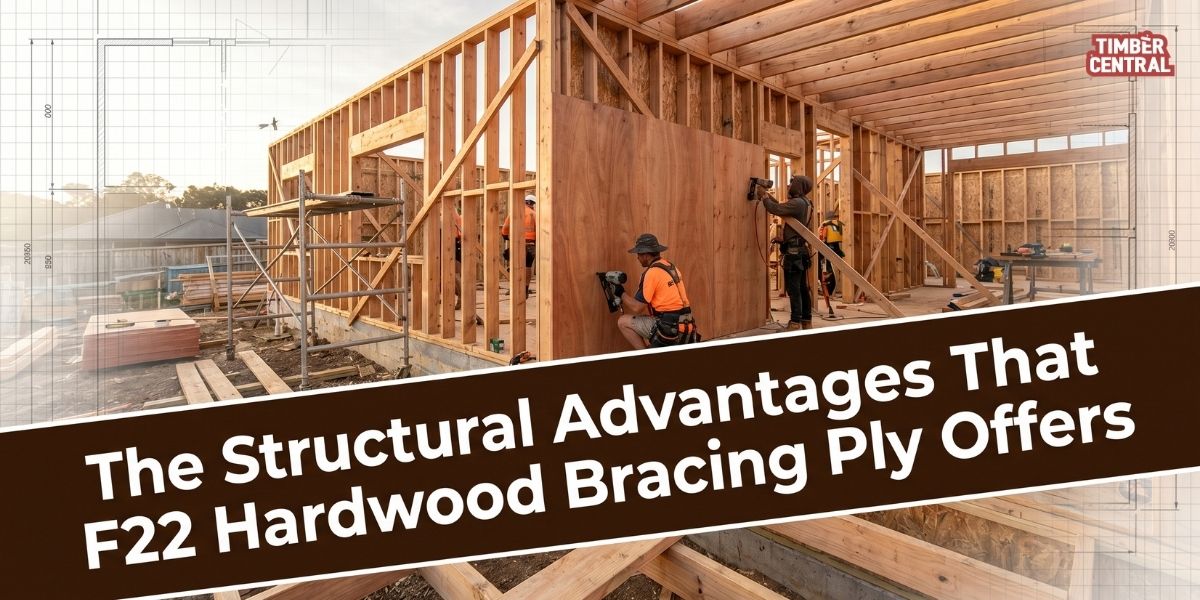
Table of contents
- Why Does F22 Hardwood Bracing Ply Matter in Structural Builds?
- What Makes F22 Bracing Ply Different From Standard Plywood Sheets?
- Where Is F22 Hardwood Bracing Ply Commonly Used?
- Does F22 Bracing Ply Handle Tough Site Conditions Well?
- Why Do Builders Often Prefer Hardwood Bracing Ply?
- Is F22 Bracing Ply a Long-Term Structural Solution?
- What Should Buyers Check Before Purchasing Bracing Ply?
- Why Is Product Quality So Important With Structural Plywood Sheets?
- Final Thoughts
- FAQs
Choosing the right bracing ply sounds straightforward. Until the project starts moving, compliance checks begin, and the wall system suddenly needs to meet structural requirements that were overlooked early on. This is where many builders, renovators, and owner-builders get caught out.
F22 Hardwood Bracing Ply is widely used because it delivers strong structural performance while handling demanding site conditions well. But performance alone is not the full story. The real value comes from understanding where this type of bracing ply fits within compliant construction systems and why it continues to be specified across residential and light commercial projects.
That distinction matters more than people realise.
At Timber Central, questions around bracing ply, plywood sheets, and structural applications come up constantly. Especially from customers trying to balance durability, compliance, and long-term reliability without overcomplicating the build.
Here is what actually matters when assessing F22 Bracing Ply.
Why Does F22 Hardwood Bracing Ply Matter in Structural Builds?
Bracing systems are there to resist lateral forces like wind loads, structural movement and pressure transfer through walls and framing. If the bracing system underperforms, the consequences are serious.
This is the main issue most people underestimate.
Many assume all plywood sheets used in wall applications perform similarly. They do not. F22 Hardwood Bracing Ply is manufactured to meet structural grading requirements associated with higher strength performance. That higher stress grade is what gives it value in structural bracing applications.
Almost any sheet product can appear suitable. But in practice, stiffness, fastening performance, and long-term structural integrity separate quality bracing ply from products that struggle under load.
And those problems usually show up later. Not immediately.
What Makes F22 Bracing Ply Different From Standard Plywood Sheets?
The hardwood construction is a major factor. Hardwood veneers generally provide greater density and strength compared to softer alternatives, which improves the panel’s ability to resist structural stress.
That said, strength is only one part of the equation.
F22 Bracing Ply is also valued because it offers:
- Strong nail holding capacity
- Reliable rigidity under lateral loads
- Consistent structural performance
- Suitability for demanding framing systems
- Good durability when correctly installed and maintained
This is often misunderstood. Builders sometimes focus only on thickness while ignoring grading and intended structural function. Thickness matters, of course, but the structural rating is what determines how the sheet performs under engineered loads.
Different job entirely.
Where Is F22 Hardwood Bracing Ply Commonly Used?
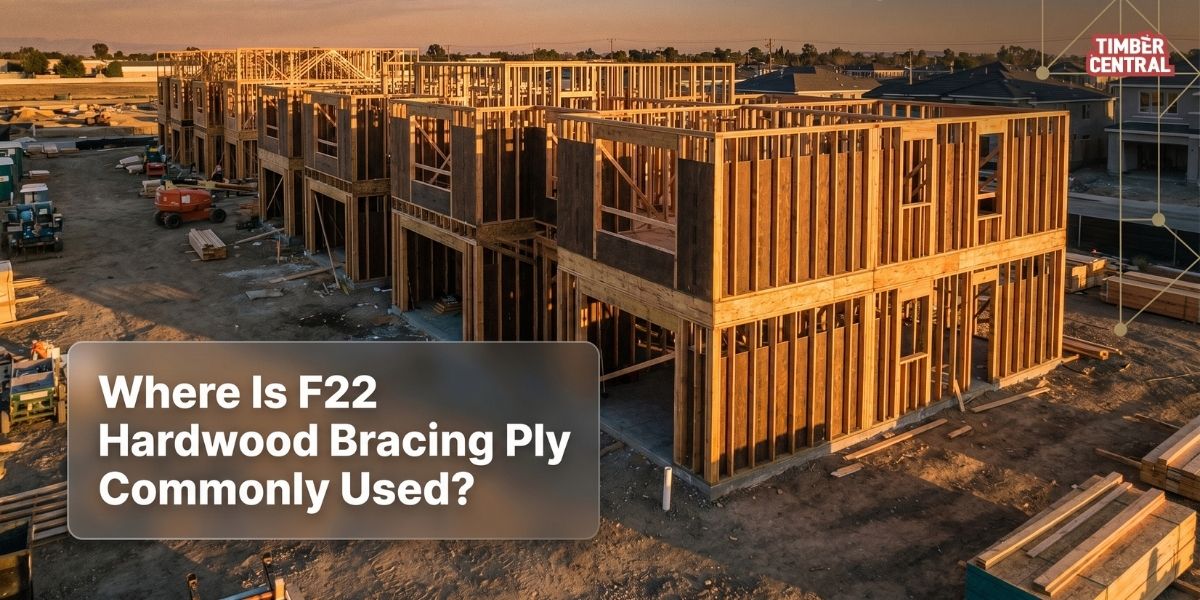
F22 Bracing Ply is commonly used in wall bracing systems within residential and light commercial construction. It may also be used in projects where durable structural plywood sheets are required as part of engineered building systems.
However, this point matters more than people realise.
The choice of timber products for any structure must always align with Australian regulations, engineering requirements, and relevant building authority guidelines. No timber supplier should recommend substituting one structural material for another without proper assessment.
At Timber Central, product discussions are always framed around compliance and suitability within approved construction specifications. That line matters. A lot.
Because using the wrong structural material based on assumptions can create compliance issues that become expensive very quickly.
Does F22 Bracing Ply Handle Tough Site Conditions Well?
Generally, yes. Particularly when installed correctly and protected according to manufacturer recommendations.
Construction sites are rarely controlled environments. Moisture exposure, movement during installation, inconsistent storage conditions, and framing variations all place pressure on structural sheet products. Lower-grade materials tend to show weaknesses early.
Warping. Edge swelling. Fastener issues.
F22 Hardwood Bracing Ply is often chosen because it performs more reliably under demanding conditions compared to lower structural grades. Many experienced builders prefer working with hardwood bracing ply because the sheets tend to maintain structural stability better during installation.
But even high-quality bracing ply can fail if installation practices are poor. Incorrect fastener spacing, poor storage, or non-compliant installation methods undermine performance fast. In practice, installation mistakes are one of the biggest reasons structural sheet systems fail inspections.
Not the material itself.
Why Do Builders Often Prefer Hardwood Bracing Ply?
Consistency.
That is usually the answer given by experienced tradespeople. Structural plywood sheets that perform consistently reduce delays, minimise callbacks, and simplify installation planning.
Many builders also value hardwood bracing ply because of its balance between strength and practicality. The sheets are commonly regarded as dependable for structural wall systems where reliable bracing performance is required.
This is where experience changes perspective. Products that look acceptable during purchasing can behave very differently once exposed to real construction conditions over several months.
And that difference costs time.
Is F22 Bracing Ply a Long-Term Structural Solution?
When properly specified, installed, and maintained within compliant building systems, F22 Bracing Ply is recognised as a durable structural material for many applications.
But durability is not automatic. This is another area where assumptions create problems.
Many people assume structural plywood sheets are maintenance-free once installed. They are not. Exposure management, moisture protection, ventilation, and correct detailing all influence long-term performance.
In practice, the surrounding construction system matters just as much as the sheet product itself.
What Should Buyers Check Before Purchasing Bracing Ply?
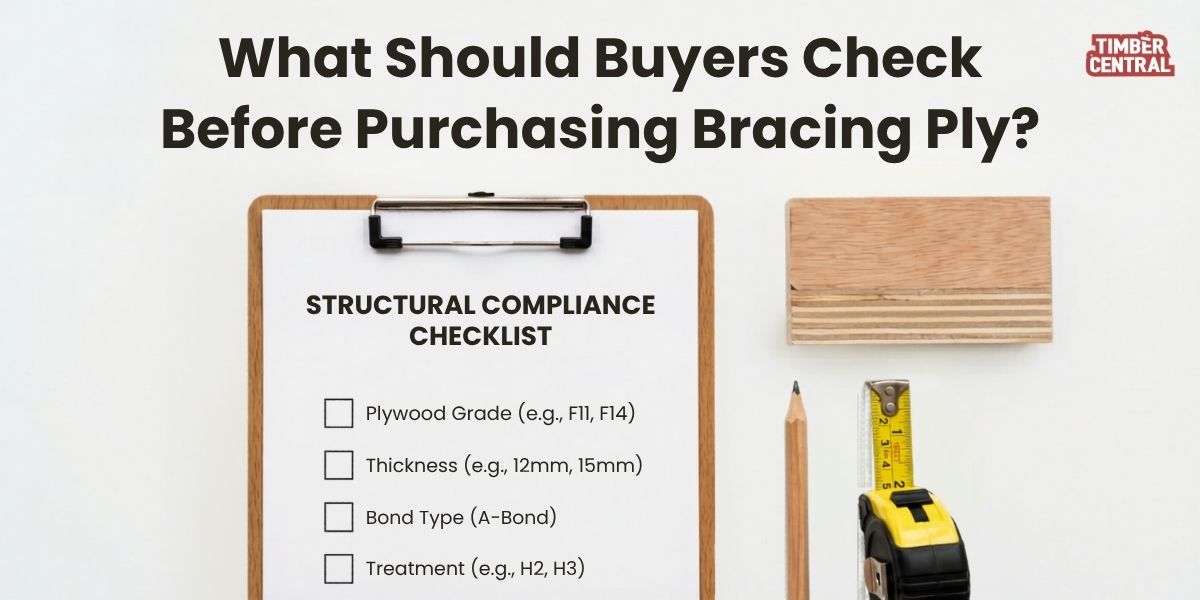
Several things. Some are more important than others.
The biggest mistake seen regularly is purchasing based purely on price while ignoring certification, structural grading, and application requirements. Cheap sheet products can become very expensive once compliance issues appear.
Before selecting bracing ply, it is important to check:
- Structural grade classification
- Compliance with relevant Australian Standards
- Sheet dimensions and thickness
- Suitability for the intended construction system
- Manufacturer specifications
- Engineering or authority requirements for the project
This sounds simple, but it isn’t. Structural materials should never be selected casually, especially for load-bearing or bracing applications.
Why Is Product Quality So Important With Structural Plywood Sheets?
Because structural performance depends on consistency.
Weak bonding, inconsistent veneer quality, or manufacturing defects reduce reliability under stress conditions. This is why experienced builders tend to avoid unknown low-grade sheet products, even if pricing appears attractive initially.
The savings rarely stay savings.
Quality F22 Hardwood Bracing Ply is manufactured for structural applications where dependable performance matters. Particularly in projects where wall bracing systems play a critical role in structural stability.
That level of reliability becomes far more important once inspections begin and environmental loads come into play.
Final Thoughts
F22 Hardwood Bracing Ply remains a widely trusted choice for structural bracing applications because it combines strength, rigidity, and dependable performance in demanding construction environments.
But the real advantage is not simply the sheet itself. It is the confidence that comes from using structural plywood sheets manufactured for compliance-focused building systems.
That distinction matters. Especially on projects where structural integrity cannot be compromised.
At Timber Central, the focus remains on supplying quality timber and plywood products while recognising that final material selection must always align with engineering requirements, Australian Standards, and relevant authority guidelines.
Because in structural construction, assumptions are expensive.
FAQs
What is F22 Bracing Ply used for?
F22 Bracing Ply is commonly used in structural wall bracing systems where resistance to lateral loads is required in residential and light commercial construction.
Is hardwood bracing ply stronger than standard plywood sheets?
Hardwood bracing ply is generally valued for its higher density, strength, and rigidity compared to many non-structural plywood sheets.
Can F22 Hardwood Bracing Ply be used outdoors?
Suitability for outdoor use depends on the specific product specifications, treatment, installation method, and exposure conditions. Manufacturer guidelines should always be checked.
Why is structural grading important in bracing ply?
Structural grading indicates how the plywood sheet is designed to perform under load conditions. This is critical for compliance and structural reliability.
Are all plywood sheets suitable for bracing applications?
No. Many plywood sheets are non-structural and are not intended for structural bracing systems. Product specifications and compliance requirements should always be verified.