- Your cart is empty
- Continue Shopping

Why Kiln Dried Hardwood Matters More Than You Think
-
 By
Timber Central
By
Timber Central - Posted on
- F17 KD Hardwood

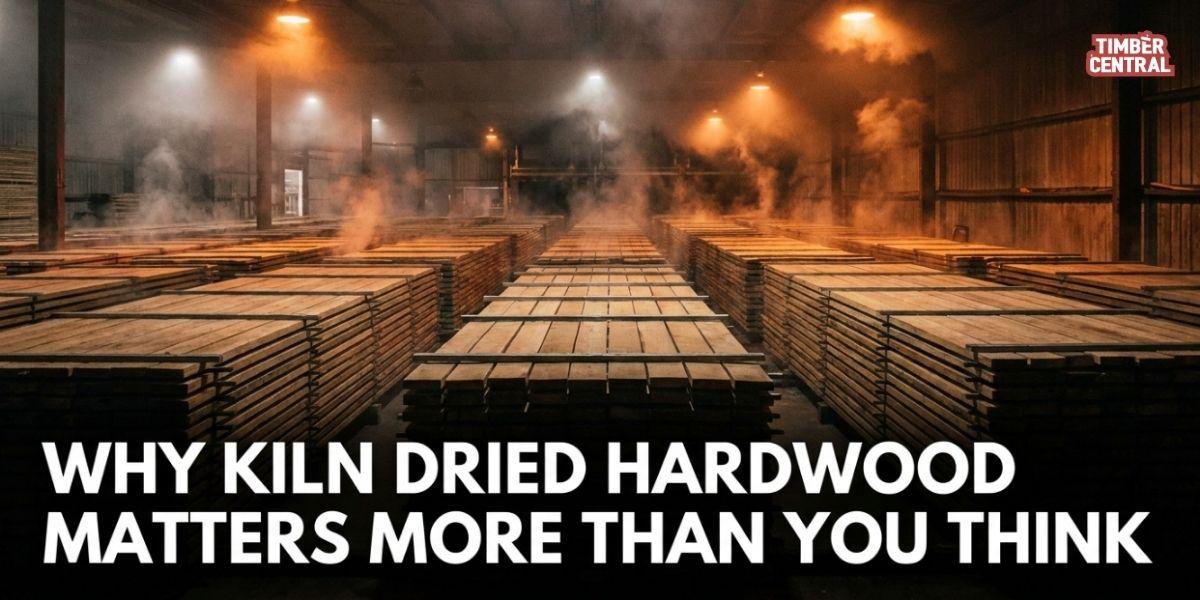
Table of contents
Most timber issues don’t show up on day one.
They show up later. When the boards start moving, joints open up, and finishes don’t sit the way they should. By that point, the discussion is no longer about timber selection. It’s about repair costs.
And that conversation is always harder.
So the real question is not whether kiln dried hardwood is “better.” It’s why skipping it keeps causing the same problems.
What Actually Goes Wrong With Undried Timber?
Timber holds moisture when it’s freshly cut. That’s not a flaw, it’s natural.
The problem starts when that moisture leaves after installation instead of before.
As it dries out, the timber shrinks, and it doesn’t shrink evenly. One section moves more than another, and that’s when you see cupping, twisting, or surface checking.
This is the biggest mistake we see. Assuming timber will “settle” nicely once installed.
It won’t.
It will move. The only question is how much damage it does while doing so.
So What Does Kiln Drying Really Change?
Kiln drying removes moisture under controlled conditions; temperature, humidity, and airflow.
That control is the whole point.
Instead of the timber reacting unpredictably on site, the adjustment happens in a controlled environment where the risk is contained.
Poorly managed drying can introduce stress into the timber. But when done properly, the result is stable material that behaves as expected. Not perfectly predictable (timber never is), but enough to work with.
Where Does F17 KD Hardwood Fit Into This?
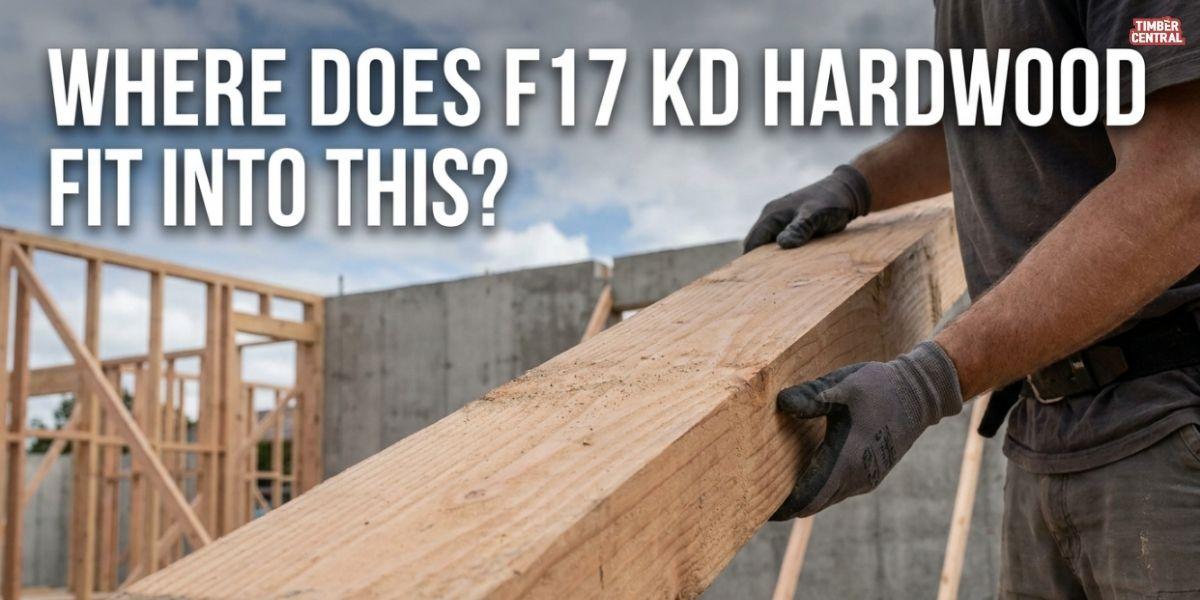
At Timber Central, F17 KD hardwood comes up often. Usually, when strength and reliability both matter.
F17 is a structural grading. It tells you the timber meets a certain performance standard. The “KD” part confirms it has been kiln dried.
Here’s where people get caught out. They focus on the structural rating and ignore moisture content. While the timber meets requirements, if it is not properly dried, movement can still undermine the outcome.
So while the selection of timber always depends on regulatory requirements and engineering specifications, kiln-dried structural hardwood like F17 KD is often specified because it addresses both strength and stability together.
Why Air Drying Often Falls Short
Air drying sounds reasonable as it is natural and cost-effective. But it is inconsistent.
Moisture leaves the outer layers faster than the core. That creates internal tension. Over time, that tension releases in ways you don’t want.
- Twisting
- Cracking
- Warping
In controlled environments, especially internal applications, this becomes a real issue. Many assume air-dried timber has “had enough time.” In practice, it rarely reaches uniform moisture levels.
And that’s the part that causes trouble later.
Is Kiln-Dried Hardwood Always Required?
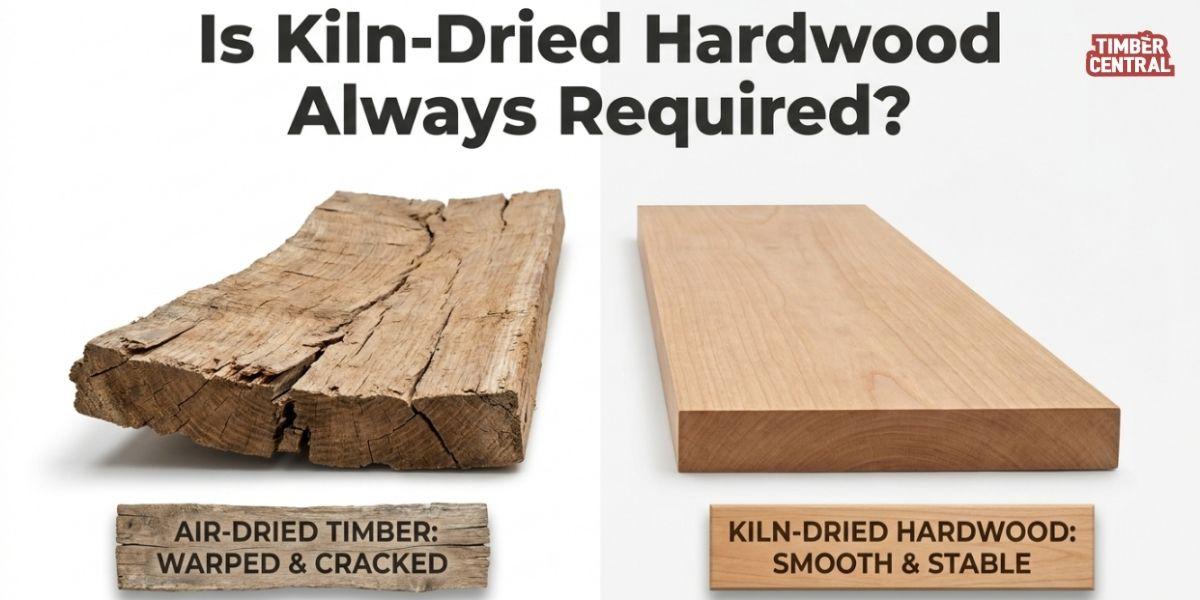
No. And it shouldn’t be treated as a blanket rule.
Timber selection must follow Australian standards and project specifications. That always comes first.
But when stability, finish quality, or tight tolerances are involved, kiln dried hardwood is not just helpful. It becomes critical.
What Happens When This Is Ignored?
The issues are predictable.
Floorboards separate. Panels distort. Fixings loosen. Doors stop aligning properly. None of this happens overnight, which is why it gets overlooked during planning.
By the time it’s visible, the cost is already locked in.
Many assume installation errors are to blame. Sometimes that’s true. But more often, the root cause is a moisture imbalance that was never addressed at the start.
Final Thought: Stability Is Not Optional
Timber will always respond to its environment.
The decision is whether that response happens before installation or after.
Kiln drying shifts that movement forward, into a controlled stage where it can be managed properly. That alone reduces a significant amount of risk.
Not all of it. But enough to make a measurable difference.
FAQs
Is F17 KD hardwood suitable for all projects?
No. Suitability depends on engineering requirements and compliance standards. It is commonly specified where both structural performance and stability are needed, but the final decision always follows regulations.
Does kiln drying completely stop timber movement?
No. It reduces it significantly. Timber will still respond to environmental changes, just in a more controlled way.
Why is moisture content such a big deal?
Because uneven moisture leads to uneven movement. That is what causes the most visible defects in timber installations.
Is air-dried timber ever acceptable?
Yes, in certain applications. But for internal use or where precision matters, it often falls short due to inconsistent moisture levels.
Does kiln-dried timber need special handling?
Yes. Poor storage can allow moisture back in. This is often overlooked and can undo the benefits of kiln drying surprisingly quickly.