- Your cart is empty
- Continue Shopping

Structural Timber Applications: Where It’s Actually Used (And Where People Get It Wrong)
-
 By
Timber Central
By
Timber Central - Posted on
- Structural Timber

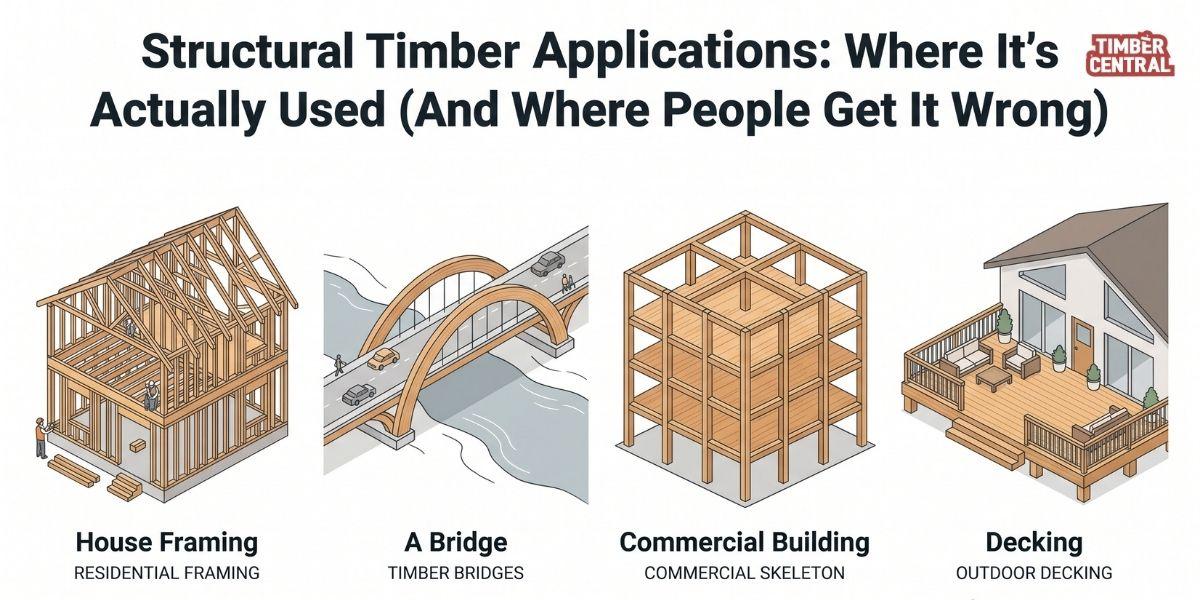
Table of contents
- Where Does Structural Timber Fit in Modern Construction?
- Residential Projects: Why Timber Dominates Here
- Commercial Buildings: Is Timber Really Up to the Job?
- Infrastructure: Bridges and Large-Scale Use
- Outdoor Structures: Where Timber Still Leads
- The Bigger Question: How Should Timber Be Selected?
- A Practical Reality Check Before You Buy
- FAQs
Structural timber shows up in more places than most expect, not just houses or “lightweight builds.”
Many assume timber is a design choice. But that’s not how it works.
In reality, structural timber is governed by engineering requirements and building regulations. Ignore that, and things fall apart quickly (sometimes literally).
So let’s break this down properly in the way it would be explained.
Where Does Structural Timber Fit in Modern Construction?
Short answer? Almost everywhere. But not in the same way.
The role timber plays depends on load, environment, and compliance requirements. That’s the framework. Everything else comes after.
Residential Projects: Why Timber Dominates Here
Where does timber actually sit in a house build? Almost everywhere that matters structurally:
- Wall framing
- Roof structures
- Floor systems
- External cladding support
Timber works because it’s adaptable, straightforward to work with and efficient when designed correctly.
But most people assume “timber is timber.” Structural grading, treatment levels, and compliance standards matter more than people realise. One wrong assumption at this stage can affect the entire build.
Poorly specified timber in residential framing is one of the most common issues seen on site. It is not dramatic at first, but shows up later in the form of movement, cracking or costly fixes.
Commercial Buildings: Is Timber Really Up to the Job?
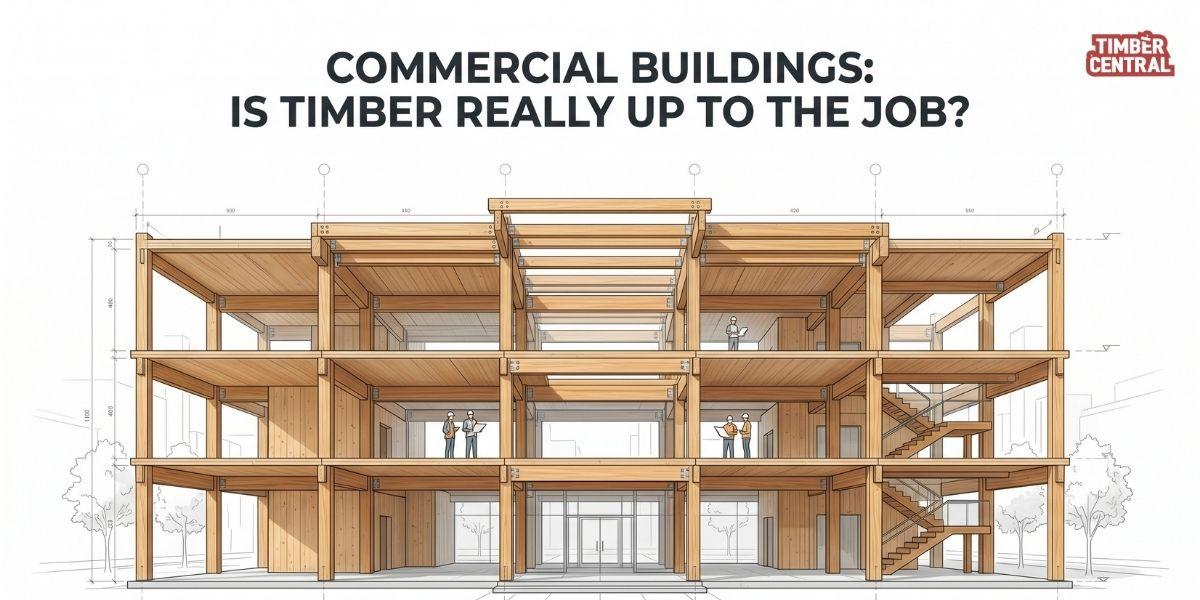
Can timber handle commercial-scale projects?
Yes. Increasingly so. But not in the way many expect.
Modern commercial builds use engineered timber systems, which are designed, tested, and certified for performance. Offices, restaurants, and retail spaces are now regularly incorporating timber frameworks.
This is the main issue:
People assume timber is a “light-duty” option. While that looks fine but in reality, engineered timber can meet serious structural demands, but only when specified correctly under regulatory guidance.
Many overlook fire ratings, load calculations, and compliance pathways. That’s a mistake and a big one.
Infrastructure: Bridges and Large-Scale Use
Is timber actually used in infrastructure?
Yes. More than most realise.
With the rise of engineered timber products, bridges and public structures are increasingly using timber elements. Not as a compromise, but as a deliberate design decision.
Durability and performance aren’t assumed. They are engineered, tested and approved under strict guidelines.
Timber in infrastructure isn’t about replacing steel or concrete outright. It’s about using the right material where it performs best. That decision sits with engineers and regulatory authorities, not preference.
Outdoor Structures: Where Timber Still Leads
Why is timber so common outdoors?
Because it performs well when treated and specified correctly (and it looks right). That matters in public and residential spaces.
Typical applications include:
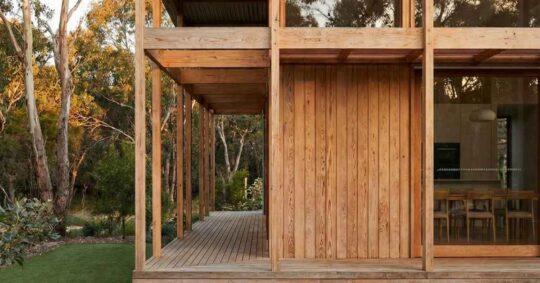
- Pergolas
- Decking
- Fencing
- External architectural features
But many assume outdoor timber just needs to “look good” and handle weather. That’s only half the story. Exposure levels, treatment standards, and installation methods are critical.
In practice, failure in outdoor timber structures is usually not about the material. It’s about incorrect specification or poor installation decisions.
The Bigger Question: How Should Timber Be Selected?
This is where clarity is needed.
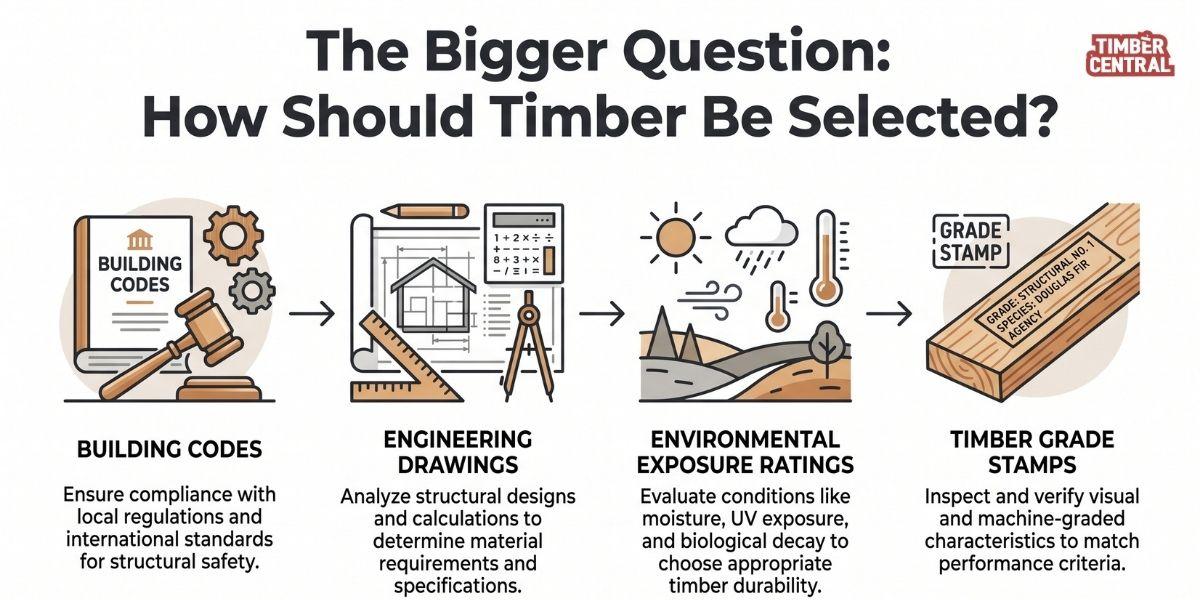
Timber selection is not a personal preference exercise. It is determined by:
- Building codes
- Engineering requirements
- Environmental exposure conditions
- Regulatory approvals
At Timber Central, the focus stays on supplying timber that aligns with these requirements. Not guessing. Not suggesting alternatives outside compliance.
Because this is the biggest mistake seen across projects, choosing materials first, then trying to make them “fit” the rules.
It works the other way around.
A Practical Reality Check Before You Buy
Thinking of using structural timber? Always follow the process properly.
- Confirm design requirements first
- Check regulatory guidelines
- Ensure engineering specifications are clear
- Source timber that meets those exact criteria
Skip any of that, and problems show up later. Not immediately but later, which is even worse.
FAQs
Is structural timber only suitable for houses?
No. It is widely used in residential, commercial, and even infrastructure projects when engineered and approved correctly.
Does timber perform well in outdoor conditions?
Yes, but only when properly treated and installed according to exposure requirements and standards.
Can timber replace steel or concrete in large buildings?
In some cases, engineered timber systems can meet similar structural demands. However, the decision depends on engineering design and regulatory approval.
Is choosing the right timber straightforward?
It sounds simple, but it isn’t. Selection must align with codes, load requirements, and environmental conditions.
Who decides what type of timber should be used?
Engineers and regulatory authorities determine the appropriate timber based on project requirements. Suppliers provide materials that meet those specifications.