
Table of Contents
i Quick Answer
F17 is a structural stress grade defined under Australian Standards for timber used in load-bearing applications such as decks, roof framing and heavy load beams. It indicates that the timber meets required strength and stiffness performance levels for demanding structural work. F17 hardwood and F17 LVL products can meet the same stress grade requirements, but they differ in how they are manufactured and how they perform in specific applications.
✓ Key Takeaways
- F17 is a structural stress grade defined under Australian Standards, indicating timber has been assessed for strength and stiffness requirements in load-bearing applications.
- Selecting the correct timber grade helps reduce risks such as excessive movement, sagging beams or unsuitable spans by ensuring the product matches engineering requirements.
- Common applications include structural decks, roof framing, heavy load beams, joists and other high-strength construction projects.
- F17 KD refers to kiln-dried timber, which helps improve stability by reducing moisture-related movement after installation.
- The F17 grade represents both strength and stiffness performance, helping engineers determine how timber will perform under structural loads.
- F17 hardwood and F17 LVL meet the same stress grade classification but have different constructions. Hardwood provides natural timber characteristics, while LVL offers engineered consistency.
- A common mistake is assuming all hardwood has the same structural performance. The actual stress grade and product specification should always be checked.
- Working with a reliable supplier helps ensure the timber supplied matches the required grade, specifications and project requirements.
F17 is a recognised structural grade in Australia used for hardwood and selected LVLs. It confirms that the material meets the strength and stiffness standards required for demanding load-bearing applications.
Many builders know the term, yet a lot of people are still unsure about what the grade represents. This often leads to guesswork and the risk of choosing timber that is not strong enough.
What does F17 really mean?
F17 is a stress grade defined under Australian Standards. It shows the timber can handle a higher stress level than common lower grades. You can think of it as a mark that tells builders the timber is suitable for load-bearing, beams, joists, and situations where failure is simply not an option.
This grade is common in seasoned hardwoods and appears in some LVLs, too. It gives builders a reference point so they know the timber will behave in a predictable way under load.
Why does this grade matter on a job site?

Because the last thing anyone wants is to deal with a sagging beam or a failed span after installation. The cost of fixing structural mistakes can get very high quickly. Using the right grade reduces this risk. It also keeps you aligned with engineering specs, council rules, and good building practice.
You might be tempted to pick a cheaper grade, but ask this. Is saving a few dollars worth the stress of a weak structure that needs repairs later?
Where is F17 commonly used?
F17 is widely used in:
- Decks that need strong support
- Roof framing
- Heavy load beams
- High-strength applications in general construction
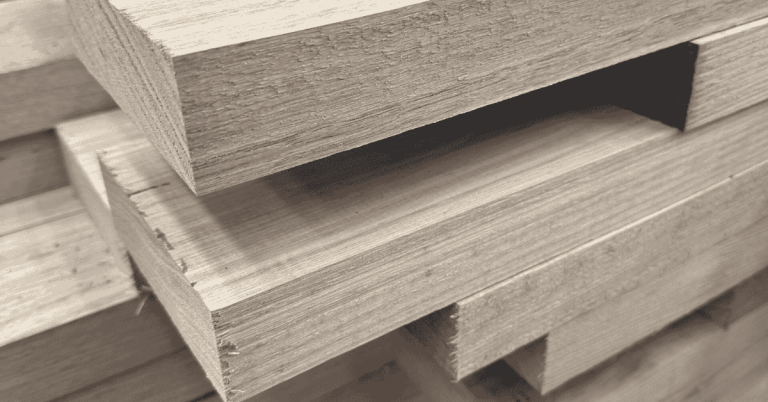
When the build calls for strong, seasoned timber that stays straight and holds its shape, F17 hardwood is often chosen.
Does kiln drying matter?
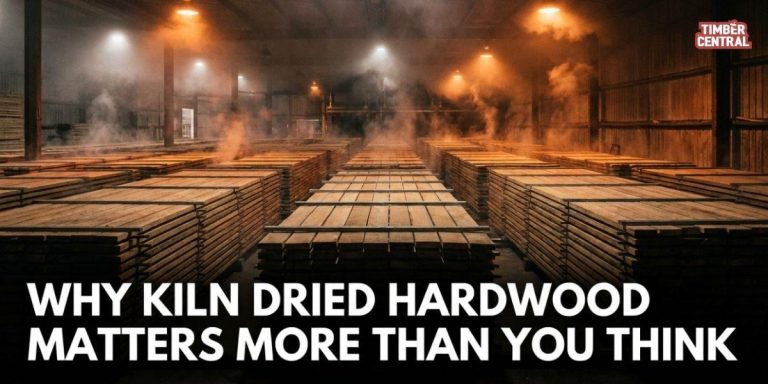
Yes. When you see “F17 KD,” the KD stands for kiln-dried. This process keeps the timber stable. You get less movement, fewer surprises, and better long-term performance. Stability also matters when you are working in the sun or dealing with moisture changes.
Is F17 only about strength?
Strength is the main factor, but the grade also reflects stiffness and performance under load. This is why engineers list it in their plans. The rating helps make sure a beam will not bow under pressure or twist in the long term.
How do F17 hardwood and F17 LVLs compare?
Both meet the same stress grade yet differ in construction and characteristics.
F17 hardwood:
- Durable, strong, and suited to applications where natural timber qualities are preferred.
F17 LVLs:
- Uniform, straight, and consistent along the full length. The engineered process removes natural irregularities and provides predictable performance.
Both serve a purpose. The key is matching the product to the job, not guessing and hoping it holds.
What mistakes do people often make?
Two mistakes show up again and again.

- Assuming any hardwood is strong enough. Without a grade, there is no guarantee it meets the stress level needed.
- Thinking all F17 timber is the same. Quality varies between suppliers. Not all timber is seasoned or prepared the same way.
This is where a trusted supplier makes a real difference.
How can the right supplier help?
A reliable supplier will guide you toward the correct grade for the job. This saves time and removes guesswork. It also gives you confidence that the timber delivered will meet the standard shown on the plans.
If you are chasing stable, strong F17 KD hardwood from a supplier that knows the product inside out, Timber Central can help. Many builders rely on its stock for consistent quality and strength across structural work.