- Your cart is empty
- Continue Shopping

Guide to Treated Pine Timber: What Most Builders Don’t Explain
-
 By
Timber Central
By
Timber Central - Posted on
- Treated Pine

Table of contents
- What Exactly Is Treated Pine Timber?
- Why Is Pine Pressure Treated?
- Understanding Timber Hazard Classes (H1–H6)
- H1 – Interior, Low Risk
- H2 – Interior With Termite Risk
- H3 – Outdoor Above Ground
- H4 – Ground Contact
- H5 – Heavy Structural Ground Contact
- H6 – Marine or Extreme Conditions
- The Biggest Mistake People Make With Treated Pine
- What Chemicals Are Used in Treated Pine?
- Where Treated Pine Timber Is Commonly Used
- FAQs
Treated pine timber is everywhere in construction: decks, framing, fencing, landscaping, and even structural components in residential builds.
Yet confusion around it is surprisingly common.
Contractors ask the same questions again and again. DIY builders misunderstand treatment levels. And many assume all treated pine is basically the same.
It isn’t.
This guide breaks down the essentials, especially the part that causes the most confusion: timber pressure treatment and hazard classifications.
What Exactly Is Treated Pine Timber?
Pine is a softwood. It grows quickly, which makes it affordable and widely available. But untreated pine has a weakness; it is naturally vulnerable to termites, fungal decay, and moisture damage. Left outside untreated, it can deteriorate quickly.
That’s where treatment comes in.
Treated pine is pine timber that has been infused with preservative chemicals designed to protect it from insects, rot, and environmental exposure. These preservatives are introduced deep into the timber through specialised processes.
The result? A far more durable material suitable for structural and outdoor applications.
Without treatment, pine might last only a few years in harsh conditions. With proper treatment and installation, it can last decades.
Why Is Pine Pressure Treated?
This is the first point that many people underestimate.
Pine treatment isn’t just about making timber “stronger.” It’s about protecting it from biological attack.
Fungi cause rot. Termites destroy structural timber. Moisture accelerates decay. Treatment chemicals act as preservatives that prevent these problems from taking hold.
And the most common way to apply those preservatives is timber pressure treatment.
Here’s the simplified process:
- Timber is placed inside a sealed treatment cylinder.
- A vacuum removes air and moisture from the wood cells.
- Preservative chemicals are forced deep into the timber under high pressure.
- A final vacuum removes excess liquid.
This pressure-impregnation process allows preservatives to penetrate the wood structure rather than just coat the surface.
Surface coatings wear off but pressure treatment doesn’t.
Understanding Timber Hazard Classes (H1–H6)
Now we arrive at the main issue.
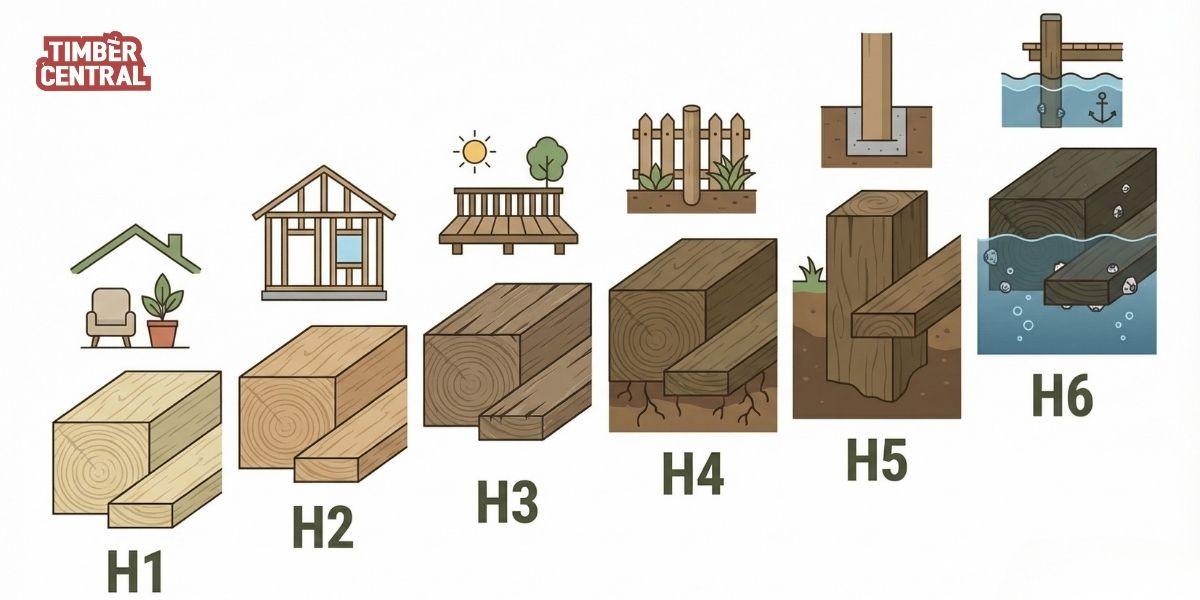
Treated pine isn’t a single product. It is classified according to hazard levels, known as H-ratings.
Each level reflects the environmental exposure the timber is designed to handle.
H1 – Interior, Low Risk
Designed for indoor areas where timber remains dry and protected. Typically used for framing or internal joinery where termite risk exists but moisture exposure is minimal.
H2 – Interior With Termite Risk
Similar to H1 but with stronger protection against termites. Often used in structural framing inside buildings.
H3 – Outdoor Above Ground
Now the exposure changes.
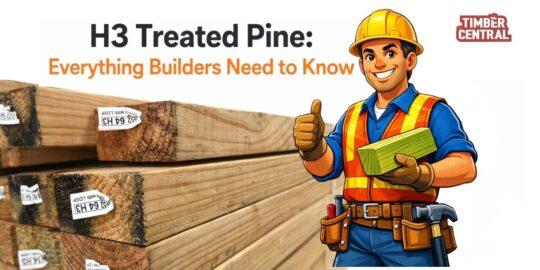
H3 timber is designed for exterior applications where timber is exposed to weather but not touching soil. Deck framing, cladding, handrails, and outdoor structures commonly fall into this category.
H4 – Ground Contact
This level is designed for timber that sits directly in the soil. Fence posts and landscaping sleepers are common examples.
H5 – Heavy Structural Ground Contact
Used for severe exposure conditions. These include structural posts or infrastructure where decay risk is significantly higher.
H6 – Marine or Extreme Conditions
The highest level. Designed for environments with saltwater exposure or very high decay risk.
The Biggest Mistake People Make With Treated Pine
Many people assume the timber yard label is just a technical detail. Something builders worry about. Something that doesn’t affect the actual structure.
That assumption causes problems.
Choosing the wrong hazard class can lead to premature decay, structural failure, or termite damage. In practice, this mistake shows up regularly in renovation projects and DIY landscaping work.
It often looks fine in the first year. Maybe the first few years. Then problems appear.
While the project seemed correct, the wrong treatment level was used.
One more critical point for anyone sourcing timber: the correct timber specification must follow relevant building regulations and authority guidelines.
Suppliers such as Timber Central provide treated pine products, but the final specification for structural use should always align with building codes and project approvals.
Compliance first.
What Chemicals Are Used in Treated Pine?
Several preservative systems are used in treated pine across Australia.
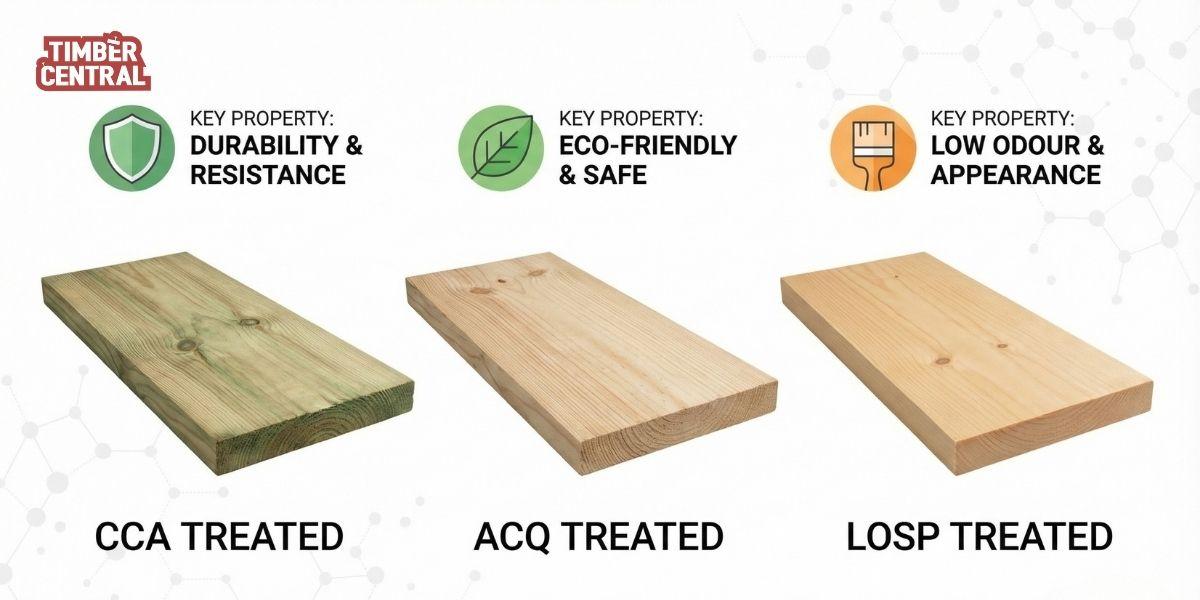
The most common include:
CCA (Copper Chrome Arsenate)
A water-borne preservative used for decades. Copper protects against fungi, arsenic deters insects, and chromium binds the chemicals to the wood.
It provides long-lasting protection, especially in outdoor structural timber.
ACQ (Alkaline Copper Quaternary)
A newer treatment system that uses copper and ammonium compounds to resist rot and pests. Often used where arsenic-free treatment is required.
LOSP (Light Organic Solvent Preservative)
Typically used for appearance-grade timber such as joinery and mouldings. It protects against insects and decay without dramatically changing the timber’s appearance.
Each treatment system has specific applications and regulatory guidance.
Where Treated Pine Timber Is Commonly Used
Because of its durability and cost efficiency, treated pine is used across a wide range of building and landscaping projects.
Common applications include:
- Structural framing
- Decking and outdoor platforms
- Pergolas and garden structures
- Fencing and landscaping
- Exterior cladding and balustrades
- Structural posts and beams
- Outdoor furniture and playground structures
It is affordable, easy to machine, and readily available in structural grades. That combination is difficult to beat.
FAQs
Does treated pine last longer than untreated pine?
Yes. Untreated pine exposed to outdoor conditions can deteriorate within a few years, while treated pine can last decades, depending on treatment level and installation conditions.
What does “pressure-treated timber” mean?
Pressure treatment refers to a process where preservatives are forced deep into timber using vacuum and pressure systems inside sealed cylinders. This allows chemicals to penetrate the wood structure rather than sit on the surface.
Can treated pine be used indoors?
Certain hazard classes, such as H1 or H2, are designed for interior applications where moisture exposure is minimal. However, the final selection should follow building regulations and project specifications.
Why is treated pine often green?
Many treatment systems include a dye that helps identify treated timber. The colour typically fades to a honey-brown tone as the timber weathers.
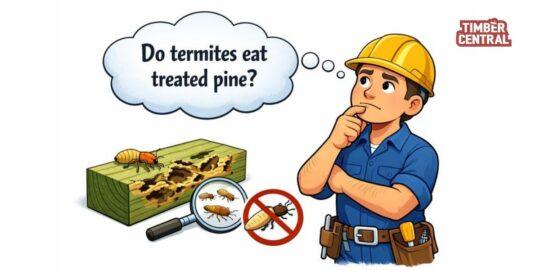
Do all treated pine products resist termites?
Most treatment systems are designed to protect timber from termites and fungal decay, but the level of protection depends on the treatment class and preservative used.