- Your cart is empty
- Continue Shopping

Red Tongue vs Yellow Tongue Flooring: What Builders Need to Know

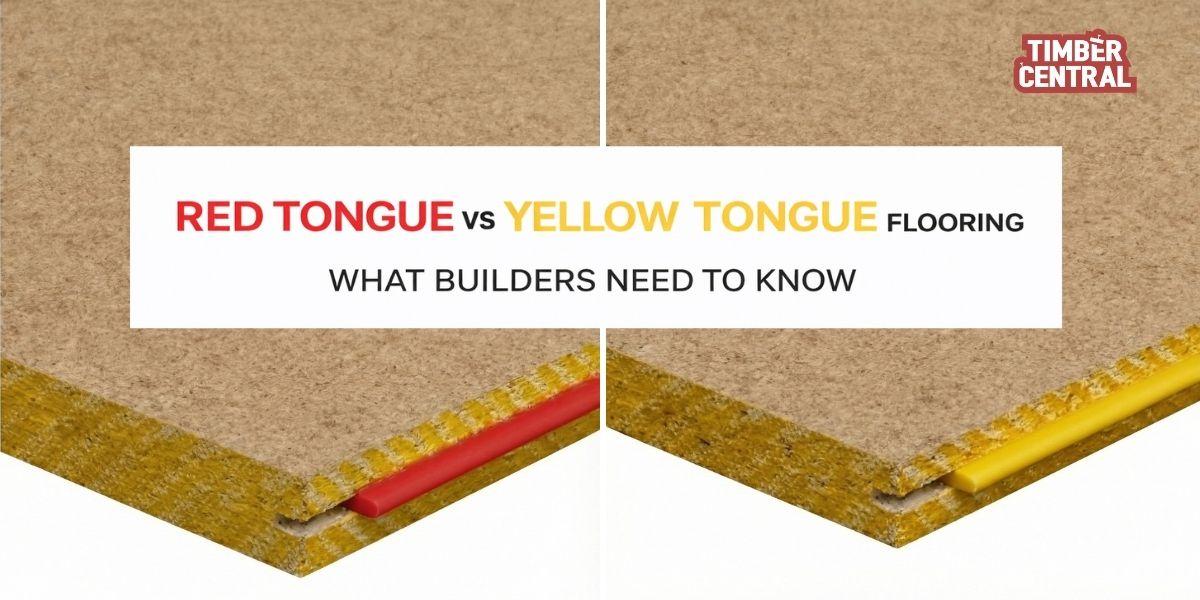
Table of contents
- What Red Tongue and Yellow Tongue Flooring Actually Are
- Why Tongue Colour Matters More Than People Think
- Thickness Differences
- Moisture Resistance Levels Explained
- Typical Uses of Yellow Tongue Flooring
- Typical Uses of Red Tongue Flooring
- Red Tongue vs Yellow Tongue: Side-by-Side Comparison
- Compliance, Standards, and Product Selection
- Why Getting This Right Prevents Flooring Failures
- FAQs
- Final Takeaway for Builders
The red tongue vs yellow tongue question comes up on jobsites constantly. And for good reason.
At a glance, both products look similar. Tongue-and-groove particleboard. Structural flooring. Widely used across residential construction in Australia.
That’s where the similarity ends.
These boards are not interchangeable, and the difference is not just the colour of the tongue. Thickness, moisture resistance, exposure classification, and approved use all vary. Miss one of those details, and problems show up later. Usually after handover. Usually expensively.
This guide breaks down red tongue flooring vs yellow tongue in practical terms. What they are. Where each is typically used. And where builders most often get caught out.
What Red Tongue and Yellow Tongue Flooring Actually Are
Both red tongue and yellow tongue are structural particleboard flooring products manufactured to Australian Standards for use as load-bearing subfloors.
They are designed to:
- Span between joists
- Provide structural support
- Act as the base for finished floor coverings
But they are manufactured to different performance levels.
The tongue colour is not branding. It is a site identifier used across the industry to indicate the board’s moisture resistance classification and, in most cases, its thickness and structural rating.
Why Tongue Colour Matters More Than People Think
The coloured tongue tells builders, inspectors, and certifiers what level of moisture resistance the board has been manufactured to.
In broad terms:
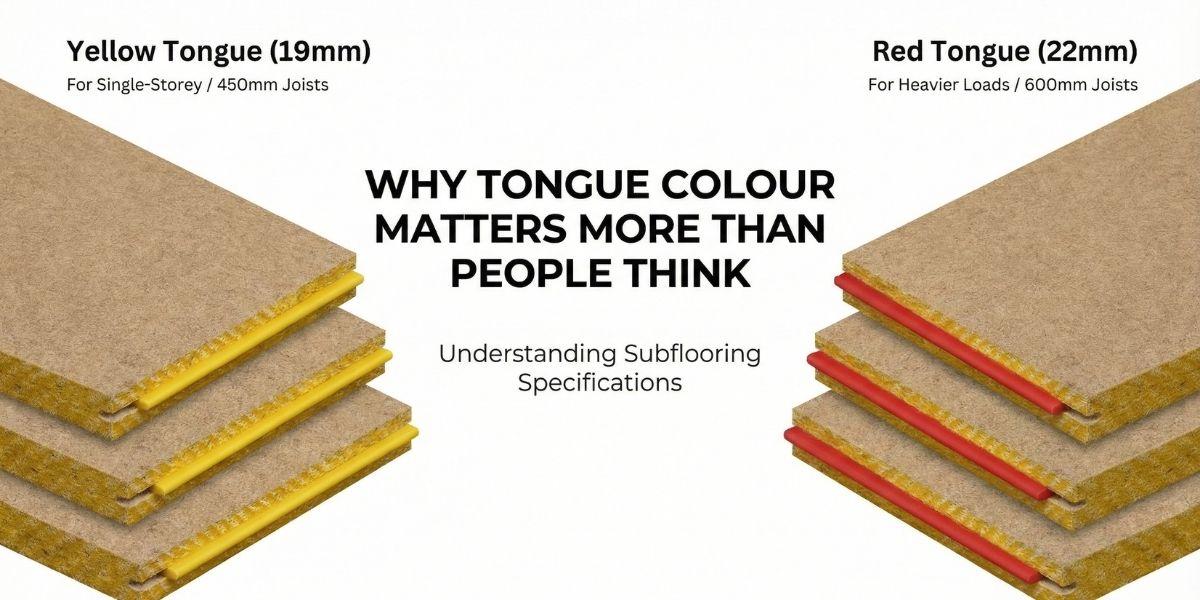
- Yellow tongue flooring is moisture resistant particleboard designed for interior, protected applications
- Red tongue flooring is manufactured for higher moisture exposure risk and is commonly supplied in a thicker, heavier-duty profile
Here’s the key point.
Tongue colour correlates with performance expectations under Australian Standards.
Using the wrong board in the wrong environment does not just increase risk. It can place the build outside approved specifications.
This is where most people get caught out.
Thickness Differences
Yellow Tongue Flooring Thickness
Yellow tongue flooring is most commonly supplied at 19mm thickness, designed for standard residential floor loads where the structure is protected from ongoing moisture exposure.
It is not designed to compensate for prolonged wetting or site delays.
Red Tongue Flooring Thickness
Red tongue flooring is commonly supplied at 22mm thickness, offering:
- Greater stiffness
- Higher load capacity
- Improved resistance to movement when exposed to moisture
Thickness can vary by manufacturer and product line, but in practice, red tongue is heavier-duty flooring. That extra thickness is deliberate. It supports performance in more demanding environments.
Assuming both products are “basically the same” because they look similar is a mistake.
Moisture Resistance Levels Explained
Both products are described as moisture-resistant. That wording causes confusion.
Moisture-resistant does not mean waterproof. It means the board can tolerate a certain level of moisture exposure without excessive swelling, provided installation and protection requirements are followed.
- Yellow tongue has a lower swelling tolerance
- Red tongue has a higher swelling tolerance
That’s the difference.
In laboratory testing, red tongue boards demonstrate less thickness swelling after moisture exposure than yellow tongue boards. This directly affects:
- Joint integrity
- Flatness
- Long-term floor performance
Many builders assume internal floors never get wet. In theory, yes. In practice, sites don’t always cooperate.
Typical Uses of Yellow Tongue Flooring
Yellow tongue flooring uses are well established across Australian housing.
Typical applications include:
- Standard residential internal floors
- Upper-storey flooring
- Living areas, bedrooms, hallways
Typical Uses of Red Tongue Flooring
Red tongue flooring uses apply where moisture exposure risk is higher, either during construction or over the life of the building.
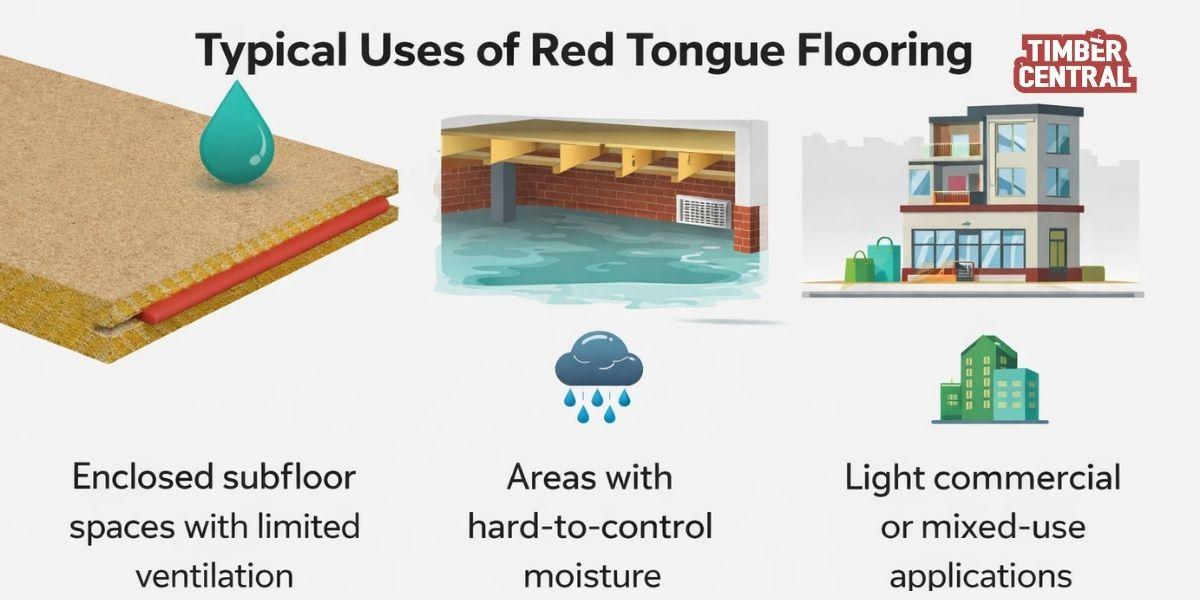
Common scenarios include:
- Enclosed subfloor spaces with limited ventilation
- Areas where moisture levels are harder to control
- Certain light commercial or mixed-use applications
Red Tongue vs Yellow Tongue: Side-by-Side Comparison
Here’s the comparison builders actually care about:
Thickness
Yellow tongue: Commonly 19mm
Red tongue: Commonly 22mm
Moisture Resistance
Yellow tongue: Moderate
Red tongue: Higher
Typical Exposure Classification
Yellow tongue: Internal, protected
Red tongue: Higher moisture risk environments
Tolerance to Construction Delays
Yellow tongue: Limited
Red tongue: Better, not unlimited
Although both are structural flooring, they behave differently on site.
Compliance, Standards, and Product Selection
Structural flooring selection in Australia is governed by:
- NCC requirements
- Australian Standards
- Engineering documentation for the project
Product choice is not discretionary. It must align with the approved design and exposure classification.
Timber Central supplies red tongue and yellow tongue flooring that meets Australian standards. Selection should always be confirmed against project documentation and regulatory guidance.
When conditions change on site, the specification needs to be reviewed. Not guessed.
Why Getting This Right Prevents Flooring Failures
Most flooring-related defects linked to moisture trace back to one decision. The wrong board in the wrong place.
- Swelling leads to uneven surfaces.
- Uneven surfaces telegraph through finished floors.
- Finished floors fail.
By then, rectification costs far exceed the price difference between products. This is not theory. It’s what shows up again and again across residential builds.
FAQs
What is the difference between red tongue and yellow tongue flooring?
The difference lies in moisture resistance, thickness, and intended exposure conditions. Red tongue is typically thicker and more moisture-resistant than yellow tongue.
Is red tongue more water-resistant than yellow tongue?
Yes. Red tongue has higher moisture resistance, but it is not waterproof and still requires protection during installation.
When should builders use red tongue flooring?
Red tongue is typically used where moisture exposure risk is higher, subject to engineering design and regulatory approval.
Is yellow tongue suitable for all indoor flooring applications?
No. Yellow tongue is suitable for internal, protected environments only. It is not intended for higher moisture exposure conditions.
Final Takeaway for Builders
Red tongue vs yellow tongue is not a preference question. It’s a performance and compliance decision.
- Thickness matters.
- Moisture resistance matters.
- Exposure conditions matter.
Get those aligned with the approved design, and the flooring does its job quietly. For decades. Get them wrong, and the problems arrive later. Always later.